What time is it? Time for Cautious Enthusiasm.
Droll. I think that’s the word I’m looking for. Broken Age, standard bearer of the adventure game rebirth, is extremely droll. Is that bad? Nnnnnoooo, but....well, I’ve always used “droll” to refer to something that’s perfectly amusing, makes you chuckle, engages you while it lasts, and never quite reaches the plateau of quality toward which it climbs. But maybe I should forgive Broken Age simply because the damn thing isn’t finished yet. Yeah, after all the griping I did on the original Cautious Enthusiasm post about how I hate it when games are released in installments, how I was totally gonna wait to buy and play Broken Age until the entire product was available...oops. I bought it assuming Act II was out. Act II won’t be out until the end of April. However, given Act I’s overall arc, I may need to eat my words a tiny bit. But we’ll get to that.
Yes, Broken Age is droll. It is funny but not hilarious. It is fun but not life-changing. Thanks to Kickstarter, Tim Schafer and his merry band reaped millions to make this game, and I won’t say the money doesn’t show on the screen, but given that they had the power to create just about anything, they almost seem scared to. Surely most of the money must have come from starry-eyed twenty- and thirtysomethings eager for an anarchic, hair-pullingly convoluted point-and-clicker on the level of the original Monkey Island. But Broken Age breaks no rules, even though its plot is entirely about rule-breaking, and seems geared, not toward those aging adventure-gamers, but to their kids. The heroes are both teenagers, the visual style is kid-friendly, the puzzles are....I have to say it.....fucking easy. Luckily, adult themes lurk beneath the surface, so maybe Broken Age is fun for the whole family, I wouldn’t know. How about on its own merits?
Well, what we have are two separate stories, seemingly unconnected (yeah, right), both promoting the idea of questioning your lot in life. Shay (voiced by Elijah Wood) is a teen boy aboard a cavernous spaceship that seems to have been constructed by a team of elementary school art teachers. The ship is run by a computer who assumes a motherly persona and fusses over Shay for every damn second of his waking life. He’s long outgrown his little world -- the game’s funniest sequence comes at the top, when the computer sends Shay on a series of insipid “adventures” clearly designed for a three-year-old. Bored and jaded, Shay finds a way to “break” one such adventure, which leads him to a shadowy lupine figure named Marek, who recruits Shay for far more dangerous, ethically dubious missions. But has Shay really escaped Mommy Computer, or is this merely the next stage of his training -- and training for what? Shay’s half of the game is definitely superior. His spaceship/playroom/prison is a wonderfully designed, cohesive environment where everything operates on the same off-kilter logic, a children’s picture book written by Franz Kafka.
Meanwhile, in what may or may not be another time and place, we meet Vella (Masasa Moyo), an adolescent girl from a community of pastry chefs. Vella’s world is askew in its own way: every year, girls like her are cheerfully sacrificed to a massive monster called Mog Chothra. The running joke is that everyone but Vella is totally okay with this, to the point where Vella’s plan to kill the creature doesn’t even register in their passive widdle brains. A society embracing something stupid and destructive against all logic, just because of peer pressure? That’s not topical at all! Anyway, Vella’s story entails the aforementioned desire to slay Mog Chothra, and is honestly not super-interesting. While Shay’s adventures have cohesion, Vella’s are rambling and episodic. She wanders through a series of thematic regions and it’s basically Loom crossed with The Hunger Games as directed by Henry Selick, but so what? I did find Vella to be the more enjoyable protagonist. Shay is kinda whiny. Vella is a sweet, charming girl who’s also got a streak of stone-cold badassery and is not afraid to ruin someone else’s day to get what she wants.
Ah, but even the trail of mayhem Vella leaves in her wake seems...safe. The entire game is a safe bet by the developers: we got all this money, we can’t mishandle it! They went-all out on art design, creating luminous environments that look painted into being. The humor is merely adequate, though I appreciate that it doesn't try too hard to be "hip." (Put it this way: I really liked The Lego Movie, but I am damned glad that Broken Age is nothing like The Lego Movie.) The puzzles are what you’d expect -- find items, then use them in esoteric ways later on -- but the problem is, their solutions are loudly telegraphed. Hey, this peach has a large PIT! Check out the PIT in this peach! Remember that word, PIT! It’s a tad insulting. The story doesn’t insult, though, especially when it teases us about how Shay and Vella might be connected. Switching at will between their stories helped in my case, as it gave me a “Eureka!” moment when I spotted a crucial parallel that helped me figure out what was going on. Yes, I guessed the big twist ending, but then the game overturned my expectations anyway. The final scene of Act I leaves us dazzled with its implications, and that’s why I reluctantly admit to enjoying the two-act structure: because I wouldn’t have gasped, “Holy shit! Did that really just happen?!” in quite the same way if I could have immediately continued playing. But then, Broken Age has the same problem as the Mockingjay movies: Act I feels like an extended preface to Act II, when all the stuff that matters will happen.
I like that tease, though, and I’m grateful I’ll be getting my hands on Act II soon. It promises to be longer, richer, more epic. I’ll blog about it. For now, I’m pleased with Broken Age while also feeling a tad mournful that game development as a whole has become so skittish. Gone are the days when developers had the power to toss whatever the hell they wanted on the screen. Even a “quirky” outfit like Double Fine probably has to push a game through a ton of focus groups who fretfully ensure that it’s not too challenging, not too culty. But, hey, they just revamped Grim Fandango to thunderous applause, so maybe Broken Age just needs to crack the door toward a renewed interest in classic adventure games, not fling it open all the way. And Act II might still turn Broken Age into a masterpiece of subversive storytelling, if the narrative clues of Act I lead where I think they’re leading. We’re not done with this game yet! Stick around.
VERDICT: I squee in a droll manner.
UPDATE: How does it all end? Read on!
Friday, March 27, 2015
Saturday, March 14, 2015
Top 10 Björk Music Videos
Wow. Okay. So I’ve had this one Top Ten list on my backburner for, like, years, because when I first attempted to write it, I thought, “Nahhhh, it’s dumb. Björk music videos? Too niche.” I am, of course, very niche, and it’s high time I demonstrated my love for Björk. After all, she’s back in the spotlight right now because her new album, Vulnicura, is the best thing she’s done since the new millennium began. Also, there’s a crappy museum exhibit or something. I know she’s an acquired taste, never mainstream, always prone to questionable creative choices. But that exact boundless weirdness is why I adore her, and it’s best displayed with visual accompaniment, so here (with links!) are...
DANG-BLASTED’S TOP TEN BJÖRK MUSIC VIDEOS
Big Time Sensuality
I’m dropping these in chronological order, so let’s start simple, with a fixed camera and a big ol’ endorphin explosion. If Björk wanted to gain some worldwide notice at the dawn of her solo career, she surely succeeded with the video for “Big Time Sensuality,” which finds the diminutive Icelander singing and dancing atop a flatbed truck as it wends its way through New York City. And when I say “dancing,” I mean...well, you have to witness it for yourself. It’s joyous, it’s awkward, it’s performed with a total lack of restraint. Björk’s freckled face is as expressive as her body; she’s a goofball in her own world, sparing barely a glance for the bewildered pedestrians in the background. This isn’t just a music video; it’s performance art, breaking the rules with benign glee. Björk is telling us, “I don’t care what you think; I just want to sing! Keep watching!” We did.
Isobel
More black-and-white? Yeah, but for a different aesthetic. While “Big Time Sensuality” strips Björk down (figuratively, you perv), “Isobel” cloaks her in pleasurable mystery. Directed by frequent collaborator Michel Gondry, this dreamy video casts Björk as both storyteller and main character: she plays an organ that is also a scrying pool, in which images of nature and civilization are juxtaposed. Everything exists in a soft, eerie haze. Gondry’s trademark surrealism is out in force (children in skeleton masks, toy airplanes hatching from a garden of lightbulbs...and foot fetishism?), but Björk still takes center stage as the smiling empress of this twilit, monochromatic world. With long hair and a sedate demeanor, she’s less a pixie, more a mature woman. But still playful.
Hyperballad
This may be my favorite Björk video of all time; it’s deceptively simple, yet so much unwinds before our eyes. For most of the song, the camera is panning back and forth across Björk’s motionless face as lights, colors, and images are superimposed over her. It’s an evocative use of two- and three-dimensionality, and is once again very mysterious. Is she dead? Merely asleep? Are we inside her mind? During this phase in her career, Björk was clearly interested in the connections between the natural and the technological, an interest she’s always maintained -- not only does she become a kind of living circuit board, but partway through the video she takes the form of a pixelated video game character. Both song and video contain hints of darkness (she imagines her own death to make her life feel more comforting), but it’s uplifting in the end; by turning inward, she’s unleashing her spirit to play. Thanks again, Michel Gondry! Every time I watch this, I find something new to admire.
Possibly Maybe
Now we’re definitely inside Björk’s mind, and it turns out to be a bottomless node of visual poetry. “Possibly Maybe” is a breakup song, not the sort of thing Björk tended to do back then (little did she know she’d release an entire breakup album in 2015). Rather than sad, it’s thoughtful. The video invites us to join Björk in a single blacklit room of glowing neon and distant lightning. Throughout the video, the room changes its color and mood. So does Björk; she cycles through different “characters” as she sings her way through heartache. Along the way, she takes a bath, eats watermelon, rocks an afro, and appears to lick lemon Kool-Aid off the floor. This sounds silly, but, as always, Björk makes her quirky behavior interlock with the lyrics and images, allowing us to admire how intensely she’s herself. As a video, “Possibly Maybe” is like a comforting box of chocolates.
All is Full of Love
Yep. The lesbian robots. It’s the one with the lesbian robots. Which is like saying Brokeback Mountain is the one with the cowboy buttsex. Flesh meets technology? Beloved ground for Björk! Step back and appreciate how elegant this video is. I just learned that the “remix” used here is actually the original version of the song. Its scraping percussion and eerie string-plucking are far superior. Robo-Björk inhabits a cold world of porcelain-white and Batmobile-black, but the eroticism begins early, as she’s assembled and serviced by phallic machines while milky fluid drips and flows in reverse time. And then, of course, the passionate and tender tryst between two ’bots, love in a seemingly loveless future. You could see it as a really weird prequel to Wall-E, but how about you just take it as the haunting work of visual art that it is? Love is everywhere. Who can argue with such a moral?
Pagan Poetry
Björk’s fourth album, Vespertine, was rather cerebral, which resulted in some hard-to-like music videos. I can’t exactly say I like the vid for “Pagan Poetry,” but neither I nor the music world can deny its impact. It is, by far, her most controversial: flashes of needles and thread piercing flesh and distorted closeups of explicit sexual acts segue into Björk performing with bare breasts and a “wedding dress” that has been literally sewn onto her body. She looks like she’s tripping balls and she probably is -- on pain endorphins. An alleged act of joy, a woman preparing to consummate her love, is twisted into a weird masochistic indulgence -- and it somehow works. It wouldn’t if Björk weren’t so committed to selling her own take on reality, if she weren’t so fearless. As it is, she embodies the joy and terror of womanhood, shocking us for a good reason.
Who Is It
Flash forward again and Björk’s next album, Medúlla, is a mostly a capella experiment in which human voices serve as every single tool in Björk’s aural arsenal. Well, mostly. The video version of “Who Is It” is all about the bells. Björk frolics across a stark volcanic plain, endless sky overhead, sporting a dress covered in thousands of silver bells. She is joined at various points by a somewhat eerie bell choir of black-clad children, and also by a pair of cute wolves. She and her minions seem to have sprung from the stark Icelandic landscape: playful sprites, icy cold, teasing us mortals with their music. I suppose Björk is part of her nation’s folklore by now. The imagery surrounding her is as evocative as ever and I want to visit Iceland someday, on the offchance I’ll glimpse her jingling amongst the boulders.
Earth Intruders
“Earth Intruders” is...well, I can’t call it mainstream, but it’s definitely one of Björk’s more accessible tracks, with its Timbaland beats and environmentalist slant. Thus, the video is easy on the eyes, but still very cool. Following Björk’s love for mixed media, venerable animator Michel Ocelot slaps the silhouettes of costumed tribal dancers onto a surreal marbleized background, while Björk’s singing face looms over all. Too goddess-y? Duh, it’s Björk; didn’t I just say she makes a good mythological figure? The dancing warriors are both naturistic and warlike; they even wield bazookas at one point, as Björk howls, “Turmoil! Carnage!” Is she saying humanity is destructive by nature? Probably, but she retains her sympathy for us and all our foibles. The ending of the video, which I won’t spoil, is a lovely moment of wordless benediction. Björk said, let there be Music, and it was Good.
Innocence
This one almost seems like a cheat, because Björk isn’t really in it. Well, she is, but...back up. She held a music video contest for “Innocence,” allowing tech-savvy fans to put images to the song. The winners, a duo from France (man, Björk can’t go wrong with French directors), dove cheerfully into the Uncanny Valley and cooked up a singing CGI mannequin of Björk, which is really creepy, but fits just fine with the video. Archetypes of childhood run amok: Björk wears a toylike armored carapace (the same one from the cover of her album, Volta) and is surrounded by horrified-looking dolls and teddy bears, as well as lizards with Cheshire cat grins who perform martial arts. Or something. I wouldn’t call it profound but it’s super fun to watch. You’d think it’s just a meaningless parade of darkly whimsical images, but the filmmakers pull off a slick “twist ending” that I wholeheartedly approve of. It’s Björk in a nutshell...or a candy-colored cartoon shell. Whatever.
Wanderlust
I’m happy. I get to end with a video that I swear is a minor freaking masterpiece. “Wanderlust” is everything great about Björk in one package. It’s weird, it’s epic, it’s dark, it’s mythic, it’s whimsical. It’s seven-and-a-half minutes of eye-popping beauty. Björk and her latest director, Encyclopedia Pictura, utilize every trick they can: claymation, puppetry, CGI, matte painting, even circus arts. In this dreamy folktale, Björk appears as a yak herder riding her beasts down a raging river, battling balletically with a mournful demon on her back, and attracting the attention of a river god...who may be fearsome but is not without compassion in the end. This video is as visually thrilling as any blockbuster, and while I still like “Hyperballad” better, I’d show “Wanderlust” to people as a more easy-to-appreciate example of how creative, how wonderfully outside-the-box, Björk has always been. She’s made two more albums since Volta and created more good music videos (“Mutual Core” almost made this list), but she has yet to top “Wanderlust.” And maybe she shouldn’t.
But, then, at 49 years old she’s as amazing as ever, and there’s no reason to think she’s gonna run out of steam any time soon. When you enter the world of Björk, you have to keep your mind open and your senses on synesthesia mode, but the rewards are many. Click those links. Feast upon, drink in, and inhale the videos. Give thanks that we have Björk.
Sunday, February 8, 2015
Myst Series, pt. 7
The Talos Principle -- In the Garden of Eden, Baby
Greetings, high-minded gaming types! Welcome to...I guess we could call it Phase Two of my Myst Review Series. Series Two? I like Series Two. It sounds all British and hip. Will there be any actual Myst games in this new batch? Probably not, for the same reason as before: no goddamn compatibility. But I’ve got a parcel of games that, I believe, invoke the spirit of Myst. Peaceful, introspective puzzlers with fascinating worlds to wander. I hope to blog about all of them this year. Let’s turn on our brain-spigots and begin.
A friend pointed me toward The Talos Principle and I knew, I just KNEW, I was gonna dig it. The mere sight of laser refractors makes me giddy. It’s gotten a lot of attention lately, won awards, been compared endlessly to other games. And it’s true, Talos takes its cues from a royal flush of pedgree titles. The Myst connection is a given. Portal gets name-dropped a lot, mostly in connection to the plot (ambiguous, bodiless god-voice wants you to move some machines around). I could also compare it to Braid, and certain Legend of Zelda and Prince of Persia mechanics, and I could DEFINITELY compare it to Lost, and will, because I’m really shameless about name-dropping Lost. But where does Talos distinguish itself?
You awaken in a sunny, ruined temple with a booming voice in your head. This disembodied daddy-figure identifies himself as Elohim and bids you search the area to find a series of overgrown Tetris blocks. Are you a nameless Joe Anybody like in the Myst series? Nope -- you’re a robot. An android from the Alex Proyas/Björk school of milky-smooth carapaces and eerie humanoid faceplates. Exploration unlocks new areas, each inspired by humanity’s past: Greco-Roman, Egyptian, Medieval Europe. There’s also an “overworld,” a series of concrete bunkers in some snowy wasteland (Antarctica? Siberia? Hoth?) that could be a forgotten Dharma station (hence the Lost reference), if not for an impossibly huge tower rearing into the lightning-choked sky. Elohim tells you not to climb the tower. Don’t do it. Don’t even think about it, even though half the Tetris blocks you find are specifically for unlocking tower floors. Elohim is a giant blowhard, full of condescension and smug superiority, patting you on the head for being a good little robo-slave. You’d think it would take a moron to blindly do what he says -- but your personal reaction is the whole point of the game.
You see, The Talos Principle is a game with Ideas, and while it avoids spelling out its premise (like Lost, guys! Guys?), it sprinkles the game with clues, themes, theories, abstractions, dissertations, and other smart-person stuff. The ancient ruins through which you roam are plainly computer-generated environments, but after awhile, you start to think the “overworld” is virtual too. You’re playing a game about playing a game. But why? Various old-school computer terminals provide answers, kind of. Something bad happened to the human race. Something all-exterminating. You are part of a last-ditch project to, if not save humanity, at least leave us with some sort of immortal legacy. You’ll delve into the minds of these half-hopeless projecteers and also read some extremely poignant snippets of humanity’s struggle to grasp the idea that this is it, the Big Death. However, the rest of the recovered documents are a bit obtuse, a smattering of myth and philosophy that’s supposed to tie into the aforementioned Ideas but that I skimmed over because the game was trying to be smarter than it needed. The religious imagery is obvious: Elohim is God, you are Adam/Eve, your virtual playground is the Garden, the tower is the Forbidden Tree, and there’s even a Serpent in the form of a puckish A.I. who appears on the computers to engage you in circuitous ethical debates.
I applaud the game for having all these Ideas and refusing to pander to doofuses, but the story is kinda in a separate world from the gameplay. The puzzles are standard fare, but push boundaries nonetheless. Each Tetris block hides within a labyrinth of passages and switches and energy doors. You will align lasers, jam machinery, ride air currents, tote around this game’s version of Weighted Companion Cubes, and tiptoe past roaming proximity drones that’ll blow your robotic butt cheeks off if you get within their no-touchy zone. There’s a Braid-like mechanic where you “record” copies of yourself, and it’s gotten no easier for my poor brain to wrap around such temporal hijinks. Luckily, the game is devious in how it expands on each puzzle mechanic. When you figure out that a drone will attack a gun turret, or that multiple cubes on a fan will greatly boost the reach of a laser refractor, or that two jammers can do amazing things when used in tandem...that’s when you get the blast of endorphins: look what I figured out! I craved that feeling in the Myst series. Talos follows after Myst in that it takes place in a series of gorgeous worlds, but each world is pretty much the same, puzzle-wise. But, then, there’s also the idea that you’re in a giant schoolroom. Myst did that too. And Talos ratchets Myst’s ethical boojums up several notches.
The ultimate story arc comes down to your own actions. Do you do what Elohim orders, lulled by his promise of divine rewards? Do you climb the tower and solve the trickier puzzles within, knowing Elohim doesn’t want you to, but also knowing that the very nature of gaming demands you find all the secrets? And what about the stars? Yes, there are gold stars, hidden within the levels, requiring a hell of a lot of outside-the-box thinking to discover. If that seems archetypal, well, you’re within a virtual environment specifically based on video games. Ain’t that clever. But what matters is what you do with the knowledge. Talos has three endings, and it’s hardly a spoiler to say that the most “complete” ending comes from deciding that Elohim can go jump off a virtual pier. That’s what I recommend, anyway, because that ending is rather epic and beautiful to behold. The gradual unraveling of the game’s plot really pays off. It’s surreal to play something with such metaphysical ramifications. I mean, it subverts the very idea of “breaking” a game, of deliberately trying to mess with what the makers want or expect. I had to cheat and look up some puzzle solutions, because I’m only human. Is the game expecting that too? Is my frustration, my trials and errors, my giving up and playing The Evil Within instead, all part of the game’s twisty meta-agenda?
Maybe. Or maybe I’m diving too deep. You can certainly just interpret The Talos Principle as a fine game with gorgeous graphics, time-honored puzzles, and an interesting storyline that leads you deep within itself. The game’s biggest Idea is that we all experience something in our own fashion, and whether our way is “right” or “wrong,” well, in a way, those labels are irrelevant because it’s all part of the overall human experience. And if the world were to end, wouldn’t we want the next iteration, the next Adam and Eve in their Garden, to be able to draw from all human experience, good or bad? To have the perspective of those who solved every puzzle, those who had the wrong answers, those who cheated, those who obeyed or disobeyed? If you knew the world was ending, what would you say? What packet of knowledge would you want our theoretical successors to imbibe?
It’s an Idea, isn’t it? Play The Talos Principle and get a glimpse.
Myst Review Series
Myst • Riven • Myst III: Exile • Myst IV: Revelation • Submachine • Kairo • The Talos Principle • The Dig • Daymare Town • Fez • Tri: Of Friendship and Madness • The Witness
Monday, January 26, 2015
Dang-Blasted Video Game Theories 2
Dang-Blasted Video Game Theories, pt. 2
How it went down: I was wrapping up Batman: Arkham Origins and wondering why I spent so much time playing a game that I didn’t really care about. And then I had one of my precious moments of “Hey, what if...” and an idea lodged in my noggin and I realized I wanted to do another post about video game theories. My first one was enjoyable to brainstorm and write. And I have some fresh ideas to share with ya.
Here are four more theories about what might be going on in certain video games. They are not profound, they have no real proof to back them up...hell, who knows if they’re even original. But here they are anyway.
SPOILERS AHEAD!
Psychonauts: The Game Takes Place In Ford Cruller’s Head
I did Bastion last time, and now here’s another game in which the headstrong young hero is mentored by a wise old geezer. Are they the same person? Not this time. This time, I posit that we’re inside the geezer’s mind.
Psychonauts takes place at a summer camp for psychic kids, many of whom dream of joining the titular team -- basically becoming a telepathic secret agent. The young hero, Raz, muscles his way into camp, begins to train, and soon discovers that one of the counselors, Coach Oleander, is an evil villain who wants to remove kids’ brains and use them to power a machine army. As Raz attempts to stop Oleander, he is aided by Ford Cruller, a retired Psychonaut who now monitors the world via a Batcave-lair under the camp. Raz explores inside the minds of various characters, but the camp is real. Or is it?
I’m not so sure. Throughout the map, you encounter multiple versions of Ford Cruller, doing various odd jobs. This is lamely explained away by an underground tram system, but no tram is fast enough to get a decrepit old man around like that, especially when you include costume changes. I say, the many Fords are a clue that Camp Whispering Rock is no more real than the other levels. Raz is inside Ford’s brain. And that’s not all: everything that happens in the game is part of an elaborate training simulation. Ford and the other counselors recognized great psychic potential in Raz, who gained access to Ford’s mind without even realizing it. So they essentially bumped him up to the “advanced program.”
Kids aren’t really having their brains sucked out. It’s all a fake scenario for Raz to fight through. Tapping into your psychic powers entails a focused subconscious; if Raz knew it was all staged, his mind wouldn’t respond correctly. He has to believe he’s really stopping an evil plot. Apart from Ford, the counselors, and Raz’s love interest, Lili (who’s secretly a junior Psychonaut), none of the characters are real. That explains why the other camp kids are so wacky and bizarre: they’re figments of Ford’s imagination. Ford creates deeper levels of his mind for Raz to explore and even pulls material from Raz’s troubled childhood, so he can face his own fears. At the end, the defeated Coach Oleander basically just apologizes for being evil, and everyone’s fine with that, because he wasn’t really evil. Just playing a role.
Needless to say, Raz proves himself to be Psychonaut material. Which sucks, because we’re never gonna get a Psychonauts 2, no matter how many letters we write to Tim Schafer. Sigh.
Closure: You’re the Soul of a Sinner Doing Penance
We, as a species, are so obsessed with death, it spills over into every art form. Video games are no exception, and such themes run through Closure, a nifty puzzle-platformer built around darkness and light. Although it’s not overt, I believe that this game is about closure for you, the player character. Because you are a deceased soul, trying to win your way into heaven.
The world of Closure is pitch-black and whatever falls outside the light, ceases to exist. To win, you must manipulate light sources to open pathways. The central character is an odd-looking creature with four legs and no face, seen above. For much of the game, this homunculus (I’ll call him the Sinner) occupies the bodies of three other people: a miner, a woman, and a little girl. My theory goes that each of these three are in peril, and you, the Sinner, are saving them. You can’t influence them directly but you can nudge them in the right direction. The miner is trapped underground and enters a helicopter at the end of his journey, representing rescue. The woman begins at a car crash, explores a forest, and winds up in a hospital where she sees herself motionless in a hospital bed. She’s in a coma, you see, and your job is to guide her consciousness back to its body. The little girl wanders away from home to visit the circus; you need to get her back safe.
Why do all this? Because in life, you sinned...but not badly enough to go to hell. Instead, you’re required to redeem yourself through the act of saving living people. At the game’s end, creepy-looking surgeons loom over you, like a holy jury. You “present” the memories of the three people you helped, literally firing them at your observers. Then comes the key image: the inhuman body of the Sinner dissolves and out flies a glowing butterfly. Your soul, free of its quasi-demonic form. You end the game by flying upwards, navigating a twisted path, and finally arriving in a starry sky. Heaven. You are redeemed.
And why all the surgical-themed imagery? Well, if we make our own heaven and hell, then perhaps the Sinner was a surgeon in life. Perhaps his sin was allowing patients to die through arrogance and carelessness. Thus, it makes sense for him (or her) to do penance by saving lives. Closure is the kind of game that can be interpreted in a million ways. I like this version.
Limbo: The Divine Comedy Allegory
The afterlife seems to be on my brain when it comes to video games, but can you blame me when certain games seem to be begging for such analysis? I refer, of course, to Limbo, that innovatively depressing indie darling in which you are a small boy trudging through a shadowy, hostile world of terror. There’s no real goal, but you seem to be on the trail of a little girl. When you finally “catch” her (under a decayed-looking treehouse), the game abruptly ends. Dafuq just happened?
I went deep into literary nerdism for this theory. Dante’s Divine Comedy is a walking tour of the afterlife: Hell, Purgatory, Paradise. Another name for Purgatory? Limbo. Where souls are purged of their sins before gaining access to heaven. Dante divided Limbo into zones for the seven deadly sins, each requiring a specific type of penance. The Wrathful, for instance, are immersed in choking, blinding smoke. In Limbo the game, everything is gray and smoky. And you encounter other children(?) who try to kill you for no reason...wrathfully. Huh. Okay, what about the slothful, who, according to Dante, are engaged in mindless, ceaseless activity? Well, in the game, you run everywhere, and in the later stages, you are forced to work machinery, pull levers, push boxes, the only goal being to continue your mindless, ceaseless journey. Well, well, well.
So the little boy in Limbo is dead, in Dante’s Purgatory, doing penance for the sins of Wrath and Sloth. But why? He’s just a kid.
A kid who got himself and his little sister killed.
The title screen of Limbo shows the same treehouse where you glimpse the girl at game’s end. Twin clouds of flies buzz beneath, as if two corpses are hidden in the tall grass. So therein hangs my tale: in life, you had a little sister who idolized you, but you found her annoying. One day, you got super angry about something and ran off into the woods, to a rotting old treehouse you’d found. Your sister followed you and tried to climb the old rope ladder to join you. You heard her struggling upward, but were too lazy to help her. The rope broke, she fell and died, and when you tried to climb down, you also fell and died. And that’s why you’re in Limbo. A child may be too innocent for hell, but you still must cast off the sins that led to your death. Your sister, pure and sin-free, appears at the end as Dante’s beloved Beatrice appeared to him in Purgatorio: a guide into Paradise. Basically, I’m forcing a happy ending upon Limbo because otherwise the game is just a field guide to hopeless nihilism. Still fun, though!
Arkham Series: Cyrus Pinkney is the Arkham Knight
And now, ladies and germs, the theory that inspired this post. I’ve placed it last because it is the silliest and probably the most unlikely. And I love it to death.
Batman: Arkham Origins, while a lame game, has plenty of sidequests and easter eggs. This includes one side-mission so unobtrusive that I didn’t even discover the damn thing until I’d finished the main story. Tucked throughout Gotham are plaques containing the journal entries of one Cyrus Pinkney, architect extraordinaire, who designed many of Gotham’s signature buildings during the 1800s. A friend to both Batman ancestor Solomon Wayne and asylum-creator Amadeus Arkham, Pinkney fought against crime and corruption and died mysteriously -- poisoned, some say, by Henry Cobblepot, progenitor of the Penguin. By reading Pinkney’s journals, Batman learns that Pinkney faked his own death, assassinated Cobblepot, and then...vanished?
Bullshit. Nobody vanishes in the Batman mythos, especially when they’re tied into the twisted mythology the games have built up. In the upcoming grand finale of the series, Arkham Knight, Batman will face the titular villain, a violent vigilante in a high-tech robo-suit, created exclusively for the game. A twisted reflection of Batman himself. Holder of a mystery grudge. Real identity unknown.
I’m calling it. Cyrus Pinkney became the Arkham Knight. Ostensibly fighting crime, his mind and ethics grew twisted. He now sees Gotham as a festering shithole of corruption that must be cleansed, which is why he’s onboard with Scarecrow’s terror-gas. I mean, come on, you know they’re gonna have the Knight’s identity be shocking somehow. Why not? “But he’d be, like, two hundred years old!” you cry. Guys, this is a universe containing Solomon Grundy, who’s been around for at least that long, and Ra’s al Ghul, who’s literally immortal just because he has a magical jacuzzi. Let’s imagine that Pinkney figured out how to prolong his life through technology, possibly with the aid of another Solomon -- Bruce Wayne’s thrice-great grandfather. Maybe that’s why he’s now a villain: the line between man and machine got blurry. And he’s already proven himself willing to murder his enemies.
I have no evidence. Well...except for one thing. If you complete the Cyrus Pinkney sidequest in Arkham Origins, you find the man’s (empty) tomb. And what lies upon his sarcophagus, forever etched in stone, quietly foreshadowing?
A knight.
Thus, I drop the mic. I’ll be back later with my awesome theory about Five Nights at Freddy’s. I’m persistent like that.
How it went down: I was wrapping up Batman: Arkham Origins and wondering why I spent so much time playing a game that I didn’t really care about. And then I had one of my precious moments of “Hey, what if...” and an idea lodged in my noggin and I realized I wanted to do another post about video game theories. My first one was enjoyable to brainstorm and write. And I have some fresh ideas to share with ya.
Here are four more theories about what might be going on in certain video games. They are not profound, they have no real proof to back them up...hell, who knows if they’re even original. But here they are anyway.
SPOILERS AHEAD!
I did Bastion last time, and now here’s another game in which the headstrong young hero is mentored by a wise old geezer. Are they the same person? Not this time. This time, I posit that we’re inside the geezer’s mind.
Psychonauts takes place at a summer camp for psychic kids, many of whom dream of joining the titular team -- basically becoming a telepathic secret agent. The young hero, Raz, muscles his way into camp, begins to train, and soon discovers that one of the counselors, Coach Oleander, is an evil villain who wants to remove kids’ brains and use them to power a machine army. As Raz attempts to stop Oleander, he is aided by Ford Cruller, a retired Psychonaut who now monitors the world via a Batcave-lair under the camp. Raz explores inside the minds of various characters, but the camp is real. Or is it?
I’m not so sure. Throughout the map, you encounter multiple versions of Ford Cruller, doing various odd jobs. This is lamely explained away by an underground tram system, but no tram is fast enough to get a decrepit old man around like that, especially when you include costume changes. I say, the many Fords are a clue that Camp Whispering Rock is no more real than the other levels. Raz is inside Ford’s brain. And that’s not all: everything that happens in the game is part of an elaborate training simulation. Ford and the other counselors recognized great psychic potential in Raz, who gained access to Ford’s mind without even realizing it. So they essentially bumped him up to the “advanced program.”
Kids aren’t really having their brains sucked out. It’s all a fake scenario for Raz to fight through. Tapping into your psychic powers entails a focused subconscious; if Raz knew it was all staged, his mind wouldn’t respond correctly. He has to believe he’s really stopping an evil plot. Apart from Ford, the counselors, and Raz’s love interest, Lili (who’s secretly a junior Psychonaut), none of the characters are real. That explains why the other camp kids are so wacky and bizarre: they’re figments of Ford’s imagination. Ford creates deeper levels of his mind for Raz to explore and even pulls material from Raz’s troubled childhood, so he can face his own fears. At the end, the defeated Coach Oleander basically just apologizes for being evil, and everyone’s fine with that, because he wasn’t really evil. Just playing a role.
Needless to say, Raz proves himself to be Psychonaut material. Which sucks, because we’re never gonna get a Psychonauts 2, no matter how many letters we write to Tim Schafer. Sigh.
Closure: You’re the Soul of a Sinner Doing Penance
We, as a species, are so obsessed with death, it spills over into every art form. Video games are no exception, and such themes run through Closure, a nifty puzzle-platformer built around darkness and light. Although it’s not overt, I believe that this game is about closure for you, the player character. Because you are a deceased soul, trying to win your way into heaven.
The world of Closure is pitch-black and whatever falls outside the light, ceases to exist. To win, you must manipulate light sources to open pathways. The central character is an odd-looking creature with four legs and no face, seen above. For much of the game, this homunculus (I’ll call him the Sinner) occupies the bodies of three other people: a miner, a woman, and a little girl. My theory goes that each of these three are in peril, and you, the Sinner, are saving them. You can’t influence them directly but you can nudge them in the right direction. The miner is trapped underground and enters a helicopter at the end of his journey, representing rescue. The woman begins at a car crash, explores a forest, and winds up in a hospital where she sees herself motionless in a hospital bed. She’s in a coma, you see, and your job is to guide her consciousness back to its body. The little girl wanders away from home to visit the circus; you need to get her back safe.
Why do all this? Because in life, you sinned...but not badly enough to go to hell. Instead, you’re required to redeem yourself through the act of saving living people. At the game’s end, creepy-looking surgeons loom over you, like a holy jury. You “present” the memories of the three people you helped, literally firing them at your observers. Then comes the key image: the inhuman body of the Sinner dissolves and out flies a glowing butterfly. Your soul, free of its quasi-demonic form. You end the game by flying upwards, navigating a twisted path, and finally arriving in a starry sky. Heaven. You are redeemed.
And why all the surgical-themed imagery? Well, if we make our own heaven and hell, then perhaps the Sinner was a surgeon in life. Perhaps his sin was allowing patients to die through arrogance and carelessness. Thus, it makes sense for him (or her) to do penance by saving lives. Closure is the kind of game that can be interpreted in a million ways. I like this version.
The afterlife seems to be on my brain when it comes to video games, but can you blame me when certain games seem to be begging for such analysis? I refer, of course, to Limbo, that innovatively depressing indie darling in which you are a small boy trudging through a shadowy, hostile world of terror. There’s no real goal, but you seem to be on the trail of a little girl. When you finally “catch” her (under a decayed-looking treehouse), the game abruptly ends. Dafuq just happened?
I went deep into literary nerdism for this theory. Dante’s Divine Comedy is a walking tour of the afterlife: Hell, Purgatory, Paradise. Another name for Purgatory? Limbo. Where souls are purged of their sins before gaining access to heaven. Dante divided Limbo into zones for the seven deadly sins, each requiring a specific type of penance. The Wrathful, for instance, are immersed in choking, blinding smoke. In Limbo the game, everything is gray and smoky. And you encounter other children(?) who try to kill you for no reason...wrathfully. Huh. Okay, what about the slothful, who, according to Dante, are engaged in mindless, ceaseless activity? Well, in the game, you run everywhere, and in the later stages, you are forced to work machinery, pull levers, push boxes, the only goal being to continue your mindless, ceaseless journey. Well, well, well.
So the little boy in Limbo is dead, in Dante’s Purgatory, doing penance for the sins of Wrath and Sloth. But why? He’s just a kid.
A kid who got himself and his little sister killed.
The title screen of Limbo shows the same treehouse where you glimpse the girl at game’s end. Twin clouds of flies buzz beneath, as if two corpses are hidden in the tall grass. So therein hangs my tale: in life, you had a little sister who idolized you, but you found her annoying. One day, you got super angry about something and ran off into the woods, to a rotting old treehouse you’d found. Your sister followed you and tried to climb the old rope ladder to join you. You heard her struggling upward, but were too lazy to help her. The rope broke, she fell and died, and when you tried to climb down, you also fell and died. And that’s why you’re in Limbo. A child may be too innocent for hell, but you still must cast off the sins that led to your death. Your sister, pure and sin-free, appears at the end as Dante’s beloved Beatrice appeared to him in Purgatorio: a guide into Paradise. Basically, I’m forcing a happy ending upon Limbo because otherwise the game is just a field guide to hopeless nihilism. Still fun, though!
Arkham Series: Cyrus Pinkney is the Arkham Knight
And now, ladies and germs, the theory that inspired this post. I’ve placed it last because it is the silliest and probably the most unlikely. And I love it to death.
Batman: Arkham Origins, while a lame game, has plenty of sidequests and easter eggs. This includes one side-mission so unobtrusive that I didn’t even discover the damn thing until I’d finished the main story. Tucked throughout Gotham are plaques containing the journal entries of one Cyrus Pinkney, architect extraordinaire, who designed many of Gotham’s signature buildings during the 1800s. A friend to both Batman ancestor Solomon Wayne and asylum-creator Amadeus Arkham, Pinkney fought against crime and corruption and died mysteriously -- poisoned, some say, by Henry Cobblepot, progenitor of the Penguin. By reading Pinkney’s journals, Batman learns that Pinkney faked his own death, assassinated Cobblepot, and then...vanished?
Bullshit. Nobody vanishes in the Batman mythos, especially when they’re tied into the twisted mythology the games have built up. In the upcoming grand finale of the series, Arkham Knight, Batman will face the titular villain, a violent vigilante in a high-tech robo-suit, created exclusively for the game. A twisted reflection of Batman himself. Holder of a mystery grudge. Real identity unknown.
I’m calling it. Cyrus Pinkney became the Arkham Knight. Ostensibly fighting crime, his mind and ethics grew twisted. He now sees Gotham as a festering shithole of corruption that must be cleansed, which is why he’s onboard with Scarecrow’s terror-gas. I mean, come on, you know they’re gonna have the Knight’s identity be shocking somehow. Why not? “But he’d be, like, two hundred years old!” you cry. Guys, this is a universe containing Solomon Grundy, who’s been around for at least that long, and Ra’s al Ghul, who’s literally immortal just because he has a magical jacuzzi. Let’s imagine that Pinkney figured out how to prolong his life through technology, possibly with the aid of another Solomon -- Bruce Wayne’s thrice-great grandfather. Maybe that’s why he’s now a villain: the line between man and machine got blurry. And he’s already proven himself willing to murder his enemies.
I have no evidence. Well...except for one thing. If you complete the Cyrus Pinkney sidequest in Arkham Origins, you find the man’s (empty) tomb. And what lies upon his sarcophagus, forever etched in stone, quietly foreshadowing?
A knight.
Thus, I drop the mic. I’ll be back later with my awesome theory about Five Nights at Freddy’s. I’m persistent like that.
Thursday, January 22, 2015
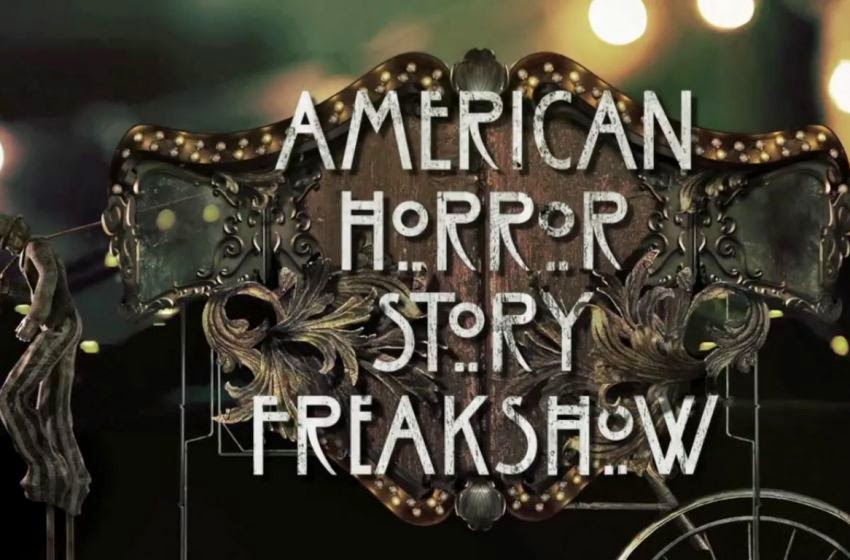
American Horror Story: Freak Show--FINALE
4.13: Curtain Call
--I do believe American Horror Story just pranked me. I enjoy my analogy about how the curtain closes, the props get packed away, the actors go home. Done for another year, until this show comes round to entertain us again. But the finale of Freak Show made the argument that for some, the curtain never closes. The spotlight never dims. The show goes on.
--I feel like a paradigm shift has been signaled. Maybe it’s just hopeful optimism (despite its strengths, Freak Show’s path was a teensy bit too well-trodden for my liking), but I feel like the winds of change are blowing. TV itself is changing. Anthology shows, star-studded “event television,” quality emphasized over ratings, all are on the rise. American Horror Story needs to adapt. Maybe it will, maybe it won’t, but its place in the metamorphic realm of the small screen mirrors the themes of this finale.
--Generally, at the close of things, AHS likes to tidy up, sweep the floor with its various subplots, zoom in on the last characters standing. I knew what that implied, and prayed so hard that it wouldn’t come to be. My prayers were ignored. Dandy proved himself to be a godawful boss of the freak show, and it didn’t take long for the troupe to decide that unemployment was preferable to being the singing, kowtowing monkeys for a rich brat’s delusional Cole Porter covers. Abandoned by the freaks, Dandy got that look. Not the scrunchy-faced look of wrath. The resigned, melancholy look. Which is far scarier. His debut wasn’t going to be what he wanted, but it would showcase the one thing he’s really good at.
--Meanwhile, Elsa made it to Hollywood only to discover that Hollywood sneers at aging, dyed-blonde wannabes with German accents who think they’re too good for appointment books. Her slide into abject humiliation was halted by a chance encounter with a friendly young functionary, played by David Burtka, who is Neil Patrick Harris’s husband. Let’s ponder the weird metaphysics of that. Now that we have sufficiently stalled, let’s get into the cruelty that followed...
--Dandy’s murder spree. Unsurprising, unwanted, so much worse than I hoped. Dandy put on a dapper white tux and tasteful makeup, then strolled through the freak show with a golden pistol. He killed them all. All of them. I wanted a few to escape. No. He calmly, methodically gunned them down. Paul the Illustrated Seal. Penny the Lizard Girl. Legless Suzi. Toulouse. Barbara the Fat lady. Even those nameless roustabouts in the background. Amazon Eve at least put up a fight, and still died, as I screamed, “GODDAMMIT, EVE, YOU BEAT UP DELL THE STRONGMAN AND YOU CAN’T DEFEAT THIS PENCIL-DICKED, BABY-FACED DOUCHEBAG?” Apparently not. The inability of the freaks to escape their pitiful ends infuriated me; this is not what I expect from such a capable group. But the demands of the plot and all that. The scene was horrifiying in its silence; the only music was Dandy eerily humming The Nutcracker Suite, punctuated by gunshots (did his pistol not need reloading or what?). One small bright side: Eve’s sacrifice allowed Desiree to hop between hiding places and save herself. Dandy took Bette and Dot as his trophies, and Jimmy staggered in to find a tentful of dead friends. FUCCCCCKKKKK, I hated that sequence. Those people actually came to mean something as characters. Once again, this show does the “massacre as social metaphor” thing and leaves us in a fetal position.
--Dandy got his just desserts, of course. He married Bette, who seemed smitten with her murderous man, but it was, in fact, the acting performance she’d always dreamed of pulling off. In truth, the sisters were collaborating with Jimmy and Desiree to bring Dandy down. They drugged him, hauled him back to the freak show, and plopped him into a glass tank for some Houdini hijinks. Dandy got to perform onstage, but the performance was him slowly drowning while the four survivors watched with glee. Desiree sensually ate popcorn, because awesome Angela Bassett moments have become the show’s meat-n-potatoes. Thus ends the freaky rise and fall of Dandy Mott, and let that be a warning to us all, what happens when people are raised to believe they can have, and deserve, anything they want. Like I said before, Dandy is scary not because he’s some sort of inbred Rosemary’s baby, predestined to murder, but because creeps like him exist everywhere. Should we feel sorry for him? At all? Well, it was kinda weird how Freak Show focused so hard on “revenge porn,” relishing how the freaks enacted lethal vigilante justice, over and over and over. Hell, Esmerelda was the only one to suggest that they not just murder anybody who wronged them, and her reward was to die gruesomely and unmourned. Odd ethics, don’t you think? Regardless, Dandy of all people had it coming.
--Wonder what happened to Detective Turdlicker? Hopefully nothing good. Maybe his murder of Regina came out and he wound up sharing a prison cell with Chester, who snapped and removed Detective Turdlicker’s spinal cord and turned him into a brand-new ventriloquist act.
--With Dandy’s sordid story done, the spotlight shifted to Elsa Mars, TV star, musical star, Hollywood walk-of-fame star. She got everything she wanted! And she hated it! HAH HAH HAH! Yep, Elsa’s dreams turned out to kinda suck. She found herself with no friends, only hangers-on. By 1960, she and her manager/hubby/bedroom sex slave couldn’t stand each other, she was disgusted with her own image, and her one remaining spark of happiness, Massimo Dolcefino, was dying of cancer. (He also revealed he’d been out in Nevada, building fake towns for the atomic bomb tests, thus making it all but certain that Season Five will involve Operation Top Hat. I’m excited!) The final nail in the coffin came when Elsa’s unsavory, unmarketable past caught up with her. Oh, you starred in Nazi snuff porn and ran a freak show whose performers all ended up murdered? Buh-bye, ex-cash cow! Nothing left for Elsa. And so she committed suicide in a most show-bizzy way: she performed on Halloween. Onstage, she murmured her way through “Heroes,” and I’m glad, because now the “anachronistic musical number” thing seems like a recurring wraparound theme and not an awkward gimmick that the showrunners dumped when nobody liked it. As Elsa sang, we got flashes of Desiree, mother of two cute kids with Angus T. Jefferson; and Jimmy, Bette, and Dot, cozily hitched and expecting younguns of their own. So nice, that a few found happiness. It looked like happiness would forever elude Elsa Mars: Edward Mordrake slithered up, with Twisty the Clown guest-starring by his side, and ended Elsa’s life. BUT.
--There is a heaven for stars of the stage! And, unlike last season, Jessica Lange’s character had done enough good deeds to earn the right to bathe in the eternal spotlight. Newly deceased, Elsa found herself back in her Cabinet of Curiosities, warmly welcomed by Ma Petite, Ethel, and all her freaks. Even Meep was there! (No Pepper, though; she wasn’t dead yet, but I assume she also finds herself back in her true home, back in the arms of the first of her two Jessica Lange-faced mama-figures.) In this warm afterlife, the house is always packed, your voice sounds great, your legs aren’t made of wood, and you receive a standing-O as you make your stage debut. Final image of the season: Elsa Mars, dead and happy, inhaling as she prepared to sing her newly-deGrinchified heart out. Awwwwwwwww.
--If that ending seemed overly corny, keep in mind that it also served as the AHS swansong of Jessica Lange. Maybe. Her initial determination to make Season Four her last seems to have wavered. If they really do shake up the formula, she may be back in some capacity. And they should shake that formula hard, because American Horror Story needs a breath of fresh air. I really enjoyed Freak Show. I loved many of the individual performances. I like how it felt a bit more grounded than Coven, and how it made its cast of freaks into interesting people rather than talking props. I’m not disappointed. But I do feel as if this show’s in a creative rut. Throughout Freak Show, the interesting stuff kept getting interrupted by weird little subplots that no one cared about, and awkward creative choices. The “what-if” murders committed by Stanley? Those should never have happened. Ma Petite’s death lost a lot of its impact when we’d already seen her “die” one week ago. Such bullshit ruins the stakes. Also, Edward Mordrake didn’t belong. A single supernatural entity in a story that is otherwise 100% free of ghosts and ghoulies? Inappropriate. These touches smacked of the need to make AHS feel like the same old horror story. But that’s not what we want. We want to be surprised. Challenged. We want this show to expand its ideas instead of closing back in around them.
--That is what I hope we’ll get next year. With the departure(?) of Lange, with the newly established connections between storylines, AHS could reinvent itself. This sounds cruel, but I want to see other actors exit besides Lange, not because I don’t like them, but because too many cooks spoil the broth. Narrow down the main cast, seek out new talent instead of scrambling to find perfunctory roles for your Emma Robertses and your Grace Gummers and your Denis O’Hares because you don’t wanna hurt their widdle feelings. Yeah, I’m mean, but there’s a reason two of my favorite actors in Freak Show were first-timers Michael Chiklis and Finn Wittrock. Make it new. Make the web of story connections into something meaningful, or at least understated, instead of a tiresome game of “spot the reference.” Listen to the winds of change and make the apparently atomic bomb-themed Season Five a tour de force that wakes us all up! DO IT.
--Do it and I will love you. I will renew my vows. Willing freak that I am.
--Wir sind alle Freaks.
Saturday, January 17, 2015
Silent Hill Review Series, pt. 11
Silent Hills Playable Teaser -- Negative Space
Sometimes you walk in and you can feel the ghosts. Energy lingers, memories or emotions, however you want to define it. It can be magnified by four walls, but really, a haunt has no physical limitations. A single room, an entire house, a field, a forest...or a town...can be the bell jar trapping a restless spirit. Me, I’ve never seen a ghost, though I have watched as a door I know was latched swung slowly open. Now, hark. The horizon is closer. The wind’s changing. Something is peering through the veil.
It’s another Silent Hill game.
When it will come, what form it will take, whether it’ll rise to the level of Silent Hill 2 or be a crashing letdown...we don’t know yet. All we have is a teaser. But that teaser has become ridiculously famous in a very short time. Seriously, guys, this thing won awards last year, as if it were a real game. And it almost is. Playable Teaser, despite its generic name, serves as a self-contained experience of terror, and the last-minute reveal that it’s for a new Silent Hill entry...well, that’s the juicy cherry on top. I don’t have a PS4 yet, so I am unable to play P.T. myself, but since there’s not much to the actual gameplay, I can get a reasonable facsimile by watching others play it. (Again, it was mostly Markiplier; that guy is becoming my go-to guru for horror gaming, even if he has yet to play a real Silent Hill game. Someone start a petition?) P.T. has made the rounds, with people proclaiming, “SCARIEST THING EVAR,” and yes, it knows how to scare. Is it scary in the distinctive way one expects from Silent Hill? Hmmmmmmm.
Well, if I had to compare, I’d say P.T. most resembles Silent Hill 4: The Room, which many would consider a drawback, but bear with me. As the “game” begins, you awaken in a bare concrete chamber. You could be anybody, or nobody. You pass through a door and find yourself in an ordinary-looking hallway. Paintings line the walls. A digital clock announces it to be nearly midnight. Moving down the hall, you turn a corner at a table where a phone lies off the hook. You pass a bathroom and a door to the outside, both locked tight. Another table, bearing a radio and a photo of a happy couple. Down some stairs, through a door, and then...you find yourself in an ordinary-looking hallway. Paintings line the walls. A digital clock announces...hold up. Yes, you’re back where you started, and the entire trailer consists of you moving down the same hallway, over and over. The graphics are amazing, almost photorealistic. And you get plenty of time to appreciate them, as you’re going to be examining this haunted corridor from top to bottom.
In The Room, the hero would return to his comfortable apartment over and over. A haven. But during the second half of the game, the apartment began to change, first subtly, then in dramatic and horrifying ways, as ghosts took hold of the walls and furniture like a spreading disease. P.T. adopts a similar style. The hall darkens. A baby cries. Blood drips. The voices on the radio sound...wrong. There’s something ghastly in the bathroom sink. There’s a wraithlike female figure, sometimes glimpsed, other times savagely attacking you. A story comes into focus: a man murdered his wife and child. Is the ghost the wife? Are you the murderous husband? Trapped at the scene of the crime, reality corkscrewing to torment you with the images of your own dark deeds? Because that’s how the town of Silent Hill operates: it digs into your mind, extracts the worst in you, turns it into a flesh-and-blood masquerade where you are the star, the audience, and the victim. This innocuous hallway with its off-white paint job and classy light fixtures begins to seem like a little sliver of hell. In that respect, P.T. taps into what makes Silent Hill games scary, the sense that even normality is all wrong. All rotten.
It’s a very well-made little experience. I think it would have been even better if it had limited itself to a scary walking tour. However, P.T. also wants you to actually do stuff, and as a result, its impact is diminished. You must, for example, find the scattered pieces of a photo. Bring a magnifying glass. The teaser pulls some Eternal Darkness-style pranks by making you think it has crashed and hiding a secret in the settings menu. Toward the end, things get super-confusing, as the “rules” for avoiding and/or manipulating the ghost lady and the baby-voiced thing in the bathroom are a bit murky. After building its scares at a good pace, making itself more freaky and intense with each trip down the hall, the teaser’s momentum screeches to a halt while you try and figure out its puzzle logic. And unless you’re unusually intuitive, or you’re a cheating cheater who cheats, you’ll be trudging back and forth, up and down, combing the hallway for answers. And that’s the bad kind of repetition. Delicious dread (“What’s coming next?”) turns to doldrums (“What the fuck do I do next?”).
You bet your ass I’m cautiously enthusiastic for Silent Hills. My enthusiasm needs no explanation, but my caution arises from Playable Teaser’s muddled final act, and the fear that it represents the final product. What if it looks amazing, only to descend into an unfocused pea soup of ideas? Or, worse, gimmicks? According to some people, one must yell into the PlayStation mic to beat the game. That may or may not be true, but I sure hope it’s not foreshadowing. I don’t need to be reveling in a Silent Hill game and then have a cheerful prompt tell me to yell into the mic, or swipe the touchpad, or take all my clothes off and dance on my couch with the controller balanced on my erection. Resident Evil has tried such bullshit on the DS, and nobody liked it then, either. Probably I’m paranoid. I just don’t want Silent Hills to be “experimental,” unless it’s the type of story-focused experiment we got in Shattered Memories. My other big fear is that P.T. doesn’t really look or feel like a Silent Hill game. Yeah, there’s the radio, and the cockroaches, and the sense that the environment itself is punishing you. But the lady ghost would be more at home in the Fatal Frame franchise, and the imagery is cherry-picked from the horror genre in general, not Silent Hill in particular. If it’s still a good, scary game, I’ll probably be satisfied. But I want the fog and the dead streets. I want the old aesthetic, and not just as fan service. I want SILENT HILL.
Once you reach the end of P.T., you are rewarded with a man, flashlight in hand, walking down a dark, abandoned street. Three names fade into view. Hideo Kojima. Guillermo del Toro. Norman Reedus. And then the title, Silent Hills, and a squee-inducing strain of Akira Yamaoka’s original, jangly musical score. If you lack sufficient nerdiness to recognize the above names, they are, respectively, the venerable creator of the Metal Gear series; the geek-god director of such films as Pan’s Labyrinth, Hellboy, and Pacific Rim; and the actor best known for potraying Daryl Motherfucking Dixon on The Walking Dead. (I’m pretty sure his name is literally Daryl Motherfucking Dixon. Like, it’s on his driver’s license.) In other words, Silent Hills has hired some serious pedigree and is making certain sure we know it. I have no sense of Kojima or his work, but...well, I would have said anything with del Toro’s name has gotta be good, but then I remembered The Strain, an unoriginal and badly-written series of vampire novels that del Toro didn’t actually write, even if he’s billed on the cover. So there’s another worry: that they paid del Toro a heap of money, but he contributed little beyond the idea stage. As for Reedus, he’s apparently playing the protagonist through motion capture, and I know he’s a good actor, but...did they really have to go with yet another grim male antihero with a lousy haircut? And will it be distracting and/or unscary to play a Silent Hill game as Daryl Motherfucking Dixon, zombie slayer extraordinaire?
I don’t know, I don’t know, I don’t know. I should not make wild assumptions. We don’t even know if Playable Teaser has any bearing on the final game at all. It could be a mere appetizer that gets folks in the survival-horror mood. What matters is that’s it’s really scary -- scarier than some actual Silent Hill games -- and also offers exciting new marketing possibilities. We live in an age where game trailers can be more expensive than some indie films. At the same time, I’ve sensed a rising backlash against trailers that mislead, or make ridiculous promises, or show off a game’s visuals but not its gameplay. Everyone got so obnoxiously excited for Watch Dogs, lulled by the promise of freedom and fully open-ended gameplay. And then the actual game was just another “Go here and shoot these guys” yawnfest. But here’s a teaser that you can actually play. And it’s not on a huge screen at E3; it’s in your own living room. It plays your nerves like a mandolin, pulls you into that shivery, happy zone of horror gaming, and then says, “You like this? You had fun? You got scared? Oh, by the way, we’re making a new Silent Hill game. Now that your appetite has been whetted, perhaps you’ll take the journey with us.” I will. Oh, yes, I will. I want to walk those foggy streets again. And I’m okay with having three talented men as my tour guides. But they’d BETTER NOT FUCK THIS UP OR THE CURSES OF A THOUSAND BETRAYED HORROR FANS WILL BE UPON THEIR BEARDED HEADS.
Keep watching this blog. Silent Hills is coming. My flashlight is packed. I’m ready. Bring it on, town of my nightmares.
SILENT HILL REVIEW SERIES
Silent Hill • Silent Hill 2 • Silent Hill 3 • Silent Hill 4: The Room • Silent Hill: Origins • Silent Hill: Homecoming • Silent Hill: Shattered Memories • Silent Hill: Downpour • Playable Teaser • Silent Hills • Silent Hill: The Movie • Silent Hill: Revelation 3D
Thursday, January 15, 2015
American Horror Story: Freak Show--Episode 12
4.12: Show Stoppers
--DANNY HUSTON A SECOND TIME! Wheeeeeeeeee!
--Okay, okay. Like a gimp, I shall eat some crow. I really loved this week’s episode. It was touching, shocking, interesting, and unexpected. It wrapped up a bunch of stuff and still left us with an “OH SHIT” cliffhanger going into the season finale. It was one of those single episodes of TV that left me feeling like I’d eaten a good, solid, full-course meal. So while it’s still possible the finale may be a letdown, I’m infused with more optimism. I am sure if I browse the online recaps, I’ll find a million people whining about how terrible this episode was. So I won’t. La la la.
--Heh. Stanley. I had a pretty good notion of how he’d get his comeuppance, so while I was not surprised by what happened, I watched it with relish, over toast and tea. During a lovely little going-away party for Elsa, the freaks, all toothy grins and good cheer, gave Stanley a gift: the head of the curator of the Museum of Oddities, in a jar. Desiree aims to set some kind of righteous murder record! Appropriately, what followed paid homage to Tod Browning’s Freaks, possibly the most (in)famous film ever made about sideshow performers. Our beloved troupe of oddballs stalked Stanley with many sharp implements, and I was surprised they didn’t show the carnage, given this show’s love of excess. Turns out they were withholding a twist, as the ep’s wind-down showcased Stanley in a cage, mute, limbless, and presumably lacking his mighty thundercock. He’s the new Meep! I’d say that’s a fitting fate for him.
--What fate shall befall dear Jimmy? He has no hands, no parents, and is still wanted by the law. Esmerelda was eager to tend to her man, but Jimmy wanted nothing to do with her. “I’ll make it right!” she mewled, and given what happened to her later, such upbeat assurances drown in a sick swamp of irony. Elsa, meanwhile, summoned up her better instincts and called upon a ghost from her past: Massimo Dolcefino, the woodcrafter who made her false legs. My crush on Danny Huston burns bright as ever, and I also love the chemistry between him and Jessica Lange, now enjoying its second incarnation. Bonus backstory: so smitten with Elsa was Dolcefino that he went on a crusade of murder against the men who mutilated her. But he fell victim to their ringleader, an infamous Nazi doctor named Hans Gruper. That name should sound familiar. Oh, yes, it should. Dolcefino survived the war but his soul, and manhood, were no longer intact. He and Elsa were left with a lifetime of regret. And Hans Gruper? He fled to America, changed his name to Arthur Arden, and began conducting unusual experiments at a certain asylum. The hyperlinking of AHS continues!
--I’m kinda happy that this ep (seemingly) wrapped up Chester’s story. He was compelling enough, but too much of a newcomer to hog the finale. His love affair with Bette and Dot was his downfall. Marjorie the dummy got more and more fed up, and to make matters worse, Dandy dropped by, all slimy charm, to hand the Tattler twins a dossier on Chester’s bad deeds. It put them on edge enough to evade Chester’s magic act, and who should step up to take their place but poor Esmerelda, all “Now will you guys like me?” There was that delicious moment when I thought, No. They’re not gonna. Are they? They did. Chester sawed Esmerelda in half, sans magic, while she screamed and died and her intestines went everywhere. “She had it comin,” Desiree tartly proclaimed. The moral of this entire season: Karma will always kick you into the mincer, so don’t even try to reform, you scumbag shithead loser. Not sure I agree, but kudos to this show for proving it can still make my jaw drop. Now a thrice-times murderer, Chester fell upon his tormentor, Marjorie, “killed” her as well, then confessed his bloody deeds to some very confused cops. Bye, Chester! Hope Briarcliff treats you well!
--Would Elsa be the next victim of the freaks’ harsh justice? They were on a roll, and Stanley managed to accuse Elsa of Ethel’s murder before they Meepified him. Enough proof to convict? The troupe thought so. Bette and Dot, however, felt they owed Elsa enough to warn her. So Elsa got the fate she, too, deserved: not death, but having to flee ignominiously into the night, hated by the very freaks she’d saved and mothered. Don’t ask me to feel sorry for her; she still gets a happy Hollywood ending, maybe. Who gave Elsa the money to skedaddle? Dandy, who’s been on the backburner for awhile, but only because he was patiently planning his next act of awfulness. Yes, Dandy Mott, rich murdering psychopath extraordinaire, is now the owner of Elsa’s Cabinet of Curiosities. And he is a very, very happy boy. Well, FUCK. This should ensure a blood-soaked final episode, huh.
--And here’s why I really dug this week. Because, rather than ending on the ominous image of Dandy claiming the freak show, or the creepy/satisfying image of Stanley as a mutilated gimp in a cage, they chose a note of deep poignancy. Jimmy had been waging an internal struggle. He’s lost so much, but Massimo Dolcefino can make him almost normal. Almost. That’s what he’s always wanted, right? But was his mother, Ethel, wise to teach him how to embrace his differences? Was his father, Dell, wise to demonstrate how being “normal” is sometimes the worse thing? Jimmy has learned a lot. And so, at the end, he made his choice, and the final image was him donning his new prosthetics: a pair of wooden lobster hands. I almost teared up a little. It was a moment of beauty. I hope there’s still some beauty to be had, and next week’s climax doesn’t end on the note of tragedy and pessimism I fear it will.
--Also, I think Desiree should wind up as the freak show’s owner. She has great motherly instincts, she can be tender, but she’ll also kill to protect those close to her. Angus T. Jefferson can be the show’s emcee. Who’s with me?
Subscribe to:
Posts (Atom)