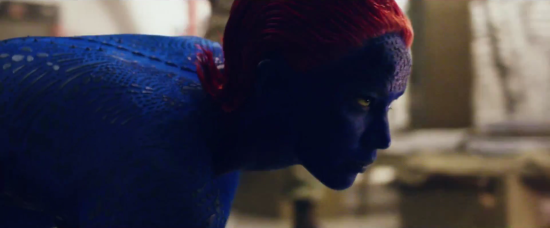
Yep, it’s Cautious Enthusiasm.
Let me preface this by stating that during Summer Blockbuster Season 2014, I went with all the weirdo options. I already talked about X-Men: Days of Future Past, which is way weirder than most superhero franchises when you think about it. After that came the excellent Snowpiercer with its offbeat postapocalyptic chic, and Lucy, in which Scarlett Johansson unlocks Godmode in the video game of life and turns omnipotent with the assistance of Morgan Freeman and stock footage. Hell, even the new TMNT (which I avoided like a bag of angry spiders) is pretty bizarre, albeit in all the wrong ways. If it was the Summer of Weird, then Guardians of the Galaxy was the cumulative jewel in the diadem, and I loved the movie, really I did. What turned out to be most weird was how something this off-the-beaten-path can still slot so neatly into the predictable safety of the Marvel machinery. Which ain’t an awful thing, just...a thing.
The Marvelverse is a happening place nowadays, to the point where I won’t be able to watch Captain America 3 without wishing we were on some other planet or realm or plane where all the real action is. Pretty much every shot in Guardians contains something cool to look at, and the sci-fi setting, coupled with the carefully tailored kookiness (Terry Gilliam visuals are now a bankable default mode), make it different from anything seen before. It’s all the snarky one-liners and strange little side details in all the previous Marvel flicks, brought to front and center. Odd, then, that it opens with tragedy worthy of Up, as a young boy named Peter Quill loses his mom to cancer. As if that weren’t enough, he gets kidnapped by aliens for...some reason. (Hint: if you’re the only Human in the galaxy to get yoinked off Planet Earth, it probably ain’t a coincidence.) Some years later, Quill (Chris Pratt) is a swaggery space pirate so blasé that he backstabs his own pirate buddies with hardly a shrug. “Starlord” is the name given to him by himself and absolutely no one else. Pay attention, though, because his flippant manner hides deep hurt, and the way in which he clings to 80s-era Earth pop culture is at first funny, then poignant.
“Starlord” finds himself in possession of the thing that every Marvel movie has, the Glowy Object That Can Destroy Us All (GOTCDUA), and a lot of people want the latest GOTCDUA (this one’s purple!), including evil alien zealot Ronan the Accuser (Lee Pace, not that you’d know under the Goth Vader makeup), who wants to...oh, who cares what Ronan’s motivation is? He’s evil and he wants to kill everybody and he’s boring, thus making him the distilled essence of Marvel movie villainy. The collision of parties interested in the GOTCDUA results in Quill meeting his new future teammates, which include the assassin Gamora (Zoe Saldana), an alleged villainess who’s itching to switch sides; Drax (Dave Bautista), a vengeful bruiser whose lack of personality is his personality; Rocket (voice of Bradley Cooper) a pissed-off raccoon with a gun fetish; and Groot (voice of Vin Diesel), a walking tree who functions like a sylvan Swiss army knife. The movie keeps emphasizing how UNCONVENTIONAL and UNHEROIC and RAGTAG these heroes are, how they AREN’T LIKE THE AVENGERS. Only they totally are, because the fuck-the-rest-of-you misfit nature of the Avengers was played up just as much, remember, guys?
What I’m saying is that the anarchy of Guardians is manufactured. I still really loved it. It was very funny, though it got a bit too self-referential at times. (There is more to humor than just pointing out cliches as they occur.) It’s got a juicy mean streak: more people die in this film than in all the previous Marvelverse films put together, and probably all the future ones as well, at least until Guardians 2. The action is a lot of fun, too -- the first “meeting” between all our heroes is a street brawl in which they find ever-new ways to injure each other, and during one space battle, the Guardians use their own ships as pinballs of death. And, again, the film never loses track of the fact that these weirdos have wounded souls. Peter Quill, Gamora, Rocket, Drax -- all use a devil-may-care nature to mask the hurt that was done to them in the past, and their gradual cooperation comes through unspoken acknowledgment of that shared trauma (well, except for Groot, but who knows, maybe he had a horrible childhood encounter with Chestnut Blight or something). I wish the film had been more about what drives its heroes and less about the usual Marvel plot in which an uninspired evildoer uses the GOTCDUA (that’s three Infinity Stones out of six! Are you keeping track?) to be evil because he is not yet quite evil enough. Oh, yeah, and we see more of former post-credits teases Thanos (Josh Brolin...I think) and The Collector (Benicio del Toro), just enough to make us wonder if either one of them serves a point.
It’s all part of the Grand Marvel Movie Plan that may never entirely end. Will our Avengers and/or Guardians ever make it all the way to Thanos, and by the time they do, will anyone still care? Watch yourself, Marvel: you’re riding high, but cinematic trends change over time. The optimistic side of me would like the more bizarro Guardians of the Galaxy vibe to kick off a new movement, just as the original Iron Man kicked off the trend of superhero flicks as interlocking, irreverent, mythological spectacles. This franchise is evolving into all kinds of strange new forms, but for now, the firm hand of of the studio is on the tiller, making sure the core formula remains intact. Guardians didn’t really break the mold; it merely offered a hint that there’s more beyond the known horizon. And that an angry talking raccoon can make you cry. And that the funniest character is the one with no sense of humor. And that Djimon Hounsou is being utterly wasted by Hollywood. And that blue-skinned space redneck Michael Rooker has a whistle-powered harpoon. And that I was able to write the previous sentence at all, which is really all I can ask for as a blogger.
And the post-credits tease...really, guys? Really? I guess it was inevitable. But Guardians of the Galaxy 2 is already shaping up to be even weirder. Exxxxxcellent.
VERDICT: A Marvel squee, which is a squee with an asterisk next to it and a footnote underneath that reads, “You already know everything that happens in this movie.” But squee anyway.
Thursday, August 21, 2014
Sunday, August 3, 2014
Top 10 Obscure Films
So, so many movies are released every year -- and unless they make millions of dollars, win a bushel of awards, or are notoriously awful, a big chunk of them are destined for relative obscurity. The unwashed masses may flock to the blockbusters and I’m not saying they shouldn’t, but I toil to keep my favorite movies from falling through the cracks. Here’s a collection of films that are somewhat obscure -- because they’re indie-minded, or underrated, or hail from a different era or country, or all of the above. Personally, I think they’re really good and more people should watch ’em. If you’re weary of Summer Blockbuster Season 2014 and are dinosaurian enough to still have Netflix DVD by mail, why not try...
DANG-BLASTED’S TOP 10 AWESOME MOVIES YOU MAY NOT KNOW EXIST
The Court Jester (1955)
Most of this list is contemporary, but The Court Jester proves how timeless humor can be. Guys, this is one of the funniest films ever made. Watch it if you don’t believe me. But put your cynicism on hold first, because this is old-school humor, relying on screwball timing, wordplay, song, and a plot that ignores logic with gusto. The sublime Danny Kaye is a bumbling medieval outlaw guarding an infant prince, and he finds himself impersonating a world-renowned court jester for...complicated reasons. A bitchy princess desires him, a witch hypnotizes him, there’s several heinous plots going on, and I can’t spoil any of the goofy hijinks that ensue. Each meticulous, choreographed gag knocks it out of the park. The script is comic poetry. If you’ve ever heard someone recite, “The pellet with the poison’s in the vessel with the pestle; the chalice from the palace has the brew that is true...” they’re quoting this film, and please join us in never letting it fade from memory. PS: Young Angela Lansbury is smoking.
The Devil’s Backbone (2001)
Guillermo del Toro has achieved mainstream fame, and deservedly so. Why not explore his early efforts? Pan’s Labyrinth is the famous award hog, but its “brother film,” The Devil’s Backbone, is just as good if not better, for my money. Both films are set at the end of the Spanish civil war, both star children, both feature a mix of human evil and the paranormal. However, Backbone is moodier, eerier, and more steeped in regret than Pan’s Labyrinth. It’s a ghost story set in a doomed orphanage, and the ghost, a murdered boy, is one of the more unique phantoms you’ll see onscreen, frightening not because he pops out of dark places to scare people, but because he desperately wants to communicate with the living. It’s a gloomy film but the shadows and darkness are alive. It’s del Toro at his most understated, yet his offbeat stamp is everywhere. Don’t just watch Hellboy and then call yourself a del Toro fan; appreciate this as well.
Europa Report (2013)
The Found Footage genre is problematic. Thanks to Paranormal Activity, it’s utilized mostly for horror, and other genres’ handheld inroads have had mediocre results (Chronicle being the notable exception). Europa Report barely appeared in theaters last year, which is a shame, because it’s a very compelling and thoughtful movie, in its own little way. It’s about a manned mission to Europa, Jupiter’s watery moon, that (of course) goes awry and finds more than it bargains for. But don’t expect a horror film or a disaster flick, though there are trace elements of both. Are there aliens? I won’t say. But the events of the film proceed with a somewhat riveting inevitability, helped by the organic outer-spacey special effects, which are convincing precisely because they don’t draw your attention. Apart from Sharlto Copley and Embeth Davidtz, the cast are unknowns, which is good: found footage aspires to ape reality, and with Europa Report, you believe what you’re seeing. You do. I beg of you, don’t get bored and stop watching, because the ending is a one-two punch of tragedy and awe.
Grizzly Man (2005)
This feel-bad Werner Herzog doc made a big splash when it came out, but since documentaries tend to have brief shelf lives, I should promote Grizzly Man as a timeless cautionary tale. Herzog is a director fascinated by human folly, which makes him perfect to scrutinize the late Timothy Treadwell, eco-warrior and self-appointed champion of Alaska’s grizzly bears, who, along with his girlfriend, was devoured alive by one of his furry pals in 2003. The film has a hypnotic dread to it: we know Treadwell’s ghastly fate, and so does Herzog’s camera, and as a result, Treadwell comes across not as a noble crusader for ursine rights but as a pompous, self-deluded wannabe messiah who lived in denial of the harsh realities of nature, and of the oblivion he was speeding towards. Werner Herzog is a brilliant asshole, and it took a brilliant asshole to make a nature film that you can’t look away from, no matter how hard you try.
Identity (2003)
What? I never said all these films would be masterpieces. Identity ain’t gonna win any awards (unless there’s something for “Best Use of Rebecca de Mornay’s Severed Head In a Tumble Dryer”), but I believe it was unfairly dismissed as just another horror/thriller. This is a film that’s all about the twist ending, and although I spoiled it not long ago, I won’t do so here, because you enjoy the film more when you let yourself be fooled, misled, and jerked around. First it’s about hapless motel guests being murdered, but then the “murders” start looking more like cosmic bloopers. Every character has a secret, no one can be trusted, and the bloodsoaked mystery envelops the viewer until you can’t look away lest you miss something crucial. And as for that twist ending, it could have been nuke-the-fridge ridiculous, but it somehow works because of how well the film has sold its own internal logic. Hitchcock’s ghost is smirking.
Incident at Loch Ness (2004)
Hello again, Werner Herzog. Compare Incident at Loch Ness with Grizzly Man and you see how unclassifiable the man is. This prankish, head-scratching film is a bizarre mash-up of genres, an “X meets Y,” though the best I can do here is “This is Spinal Tap meets Lake Placid.” Herzog is making a documentary about the Loch Ness Monster, and someone else is making a documentary about the making of the documentary, and there’s a lot of winky-winky humor and Steve Zissou-like hijinks, and then the actual Loch Ness Monster turns up and starts eating cast members, and we have no way of knowing if this was a failed documentary that Herzog repurposed as fiction, or if the whole thing was planned as fiction from the start, or WHAT. You see how I needed a huge run-on sentence to sum up the film, and still failed. It’s that kind of movie, and I freaking love it for breaking every rule there is to break. If you’re confused, ask Herzog. Or just sit back and chuckle at what is, in the end, an excellent black comedy. I think.
Monsters (2010)
It’s nice when talent is recognized. Monsters has shed some obscurity lately due to its director, Gareth Edwards, being handed the recent new Godzilla film. Godzilla 2014 was pretty awesome, and Edwards’ earlier big beastie movie shares DNA. Monsters is a great example of doing a lot with a little. It’s set in a near-future where a big chunk of Mexico has been infested by giant octopoid creatures from Europa (hello again!), and follows two people’s perilous journey northward into the US. There are barely any monsters onscreen. There are barely any actors onscreen. Instead, there is hypnotic intrigue, a slow-paced trek through a world not quite right. But it’s not a horror movie. It ends with a beautiful revelation about the towering alien creatures, their motives, and...their thoughts. There’s a bit of that old trope, We Are the Real Monsters, but this isn’t a preachy movie, just an introspective one. It takes a deep breath, then slowly exhales for ninety minutes. It’s sublime. I knew Gareth Edwards was going places, and I hope Godzilla is just the next stepping stone.
The Secret of Kells (2009)
The Secret of Kells got an Oscar nomination, but in a world where Oscar winners quickly fade into the aether, I fear for its longevity. It should last. Hell, it should be taught in schools. There is no animated movie like this one. It tosses out the tropes of 3D and backtracks to show what is possible in a flat dimension. Appropriate that the story involves Ireland’s mythic Book of Kells, because the images resemble ancient illustrations from a proto-medieval text, brought to life via modern animation techniques. The result is deeply stylized and intensely, eye-poppingly beautiful. The plot is all well and good (vikings! Forest spirits! Brendan Gleeson!) but Kells is really about color, motion, and intense attention to detail. It’s deceptive. It looks cute on the surface but its elegant maturity bubbles up as you view it. Don’t take my word for it, see for yourself. This is one cartoon where you don’t even need the excuse of having children.
Tampopo (1985)
Japan is weird. I’ve said it before, and now I can just let Tampopo speak for itself. This offbeat foodie flick is a parody of American westerns, but unlike our idea of parody, Tampopo is less about reference jokes and more about having fun with archetypes. The main plot follows a struggling single mom as she attempts to create the perfect Tokyo noodle shop with the help of a cowboy-like trucker. What makes Tampopo special are its side plots, which are almost more like Monty Python sketches, all involving food. A gangster and his girlfriend treat eating as a sexual fetish. Women take an ill-fated class on how to sup as “quietly” as Americans. A hapless intern humiliates his bosses with his knowledge of gourmet dining. A lot of these scenes contain surrealist elements. Tampopo is not conventionally hilarious, but what it does is whip up an appetite. It’s a film by food lovers, for food lovers, presented as a series of succulent cinematic morsels. Don’t watch it on an empty stomach -- you’ll be diving for your takeout menus.
Waking Ned Devine (1998)
Some of the entries on this list may be a tad hipsterish, but our closer, Waking Ned Devine, is a film without guile, sweet and delightful. In the Irish village of Tullymore, where the population is in the double digits, local geezer Ned Devine drops dead upon learning he has won millions in the lottery. The rest of the village honors Ned in the best way possible: by constructing an elaborate ruse to fool the Powers That Be, nab the prize, and share it equally. This flagrant act of lawlessness leads to some hilarious cat-and-mouse games with the derpy lotto officials, but it also allows us to fall in love with the colorful residents of Tullymore and root for them way more than we’d ever root for Danny Ocean and his numerical posse. This heist is full of heart, and the titular character’s name is a good metaphor for how the pieces of the Tullymorians’ plan fall into place (the fate of the sole villainous character definitely suggests the playful hand of God). It’s a movie that makes you feel like good people really do get their just reward sometimes. Divine.
Now copypaste this list and watch all these movies. I don’t care how, torrent them if you must, just DO IT. You’ll thank me.
DANG-BLASTED’S TOP 10 AWESOME MOVIES YOU MAY NOT KNOW EXIST
The Court Jester (1955)
Most of this list is contemporary, but The Court Jester proves how timeless humor can be. Guys, this is one of the funniest films ever made. Watch it if you don’t believe me. But put your cynicism on hold first, because this is old-school humor, relying on screwball timing, wordplay, song, and a plot that ignores logic with gusto. The sublime Danny Kaye is a bumbling medieval outlaw guarding an infant prince, and he finds himself impersonating a world-renowned court jester for...complicated reasons. A bitchy princess desires him, a witch hypnotizes him, there’s several heinous plots going on, and I can’t spoil any of the goofy hijinks that ensue. Each meticulous, choreographed gag knocks it out of the park. The script is comic poetry. If you’ve ever heard someone recite, “The pellet with the poison’s in the vessel with the pestle; the chalice from the palace has the brew that is true...” they’re quoting this film, and please join us in never letting it fade from memory. PS: Young Angela Lansbury is smoking.
The Devil’s Backbone (2001)
Guillermo del Toro has achieved mainstream fame, and deservedly so. Why not explore his early efforts? Pan’s Labyrinth is the famous award hog, but its “brother film,” The Devil’s Backbone, is just as good if not better, for my money. Both films are set at the end of the Spanish civil war, both star children, both feature a mix of human evil and the paranormal. However, Backbone is moodier, eerier, and more steeped in regret than Pan’s Labyrinth. It’s a ghost story set in a doomed orphanage, and the ghost, a murdered boy, is one of the more unique phantoms you’ll see onscreen, frightening not because he pops out of dark places to scare people, but because he desperately wants to communicate with the living. It’s a gloomy film but the shadows and darkness are alive. It’s del Toro at his most understated, yet his offbeat stamp is everywhere. Don’t just watch Hellboy and then call yourself a del Toro fan; appreciate this as well.
Europa Report (2013)
The Found Footage genre is problematic. Thanks to Paranormal Activity, it’s utilized mostly for horror, and other genres’ handheld inroads have had mediocre results (Chronicle being the notable exception). Europa Report barely appeared in theaters last year, which is a shame, because it’s a very compelling and thoughtful movie, in its own little way. It’s about a manned mission to Europa, Jupiter’s watery moon, that (of course) goes awry and finds more than it bargains for. But don’t expect a horror film or a disaster flick, though there are trace elements of both. Are there aliens? I won’t say. But the events of the film proceed with a somewhat riveting inevitability, helped by the organic outer-spacey special effects, which are convincing precisely because they don’t draw your attention. Apart from Sharlto Copley and Embeth Davidtz, the cast are unknowns, which is good: found footage aspires to ape reality, and with Europa Report, you believe what you’re seeing. You do. I beg of you, don’t get bored and stop watching, because the ending is a one-two punch of tragedy and awe.
Grizzly Man (2005)
This feel-bad Werner Herzog doc made a big splash when it came out, but since documentaries tend to have brief shelf lives, I should promote Grizzly Man as a timeless cautionary tale. Herzog is a director fascinated by human folly, which makes him perfect to scrutinize the late Timothy Treadwell, eco-warrior and self-appointed champion of Alaska’s grizzly bears, who, along with his girlfriend, was devoured alive by one of his furry pals in 2003. The film has a hypnotic dread to it: we know Treadwell’s ghastly fate, and so does Herzog’s camera, and as a result, Treadwell comes across not as a noble crusader for ursine rights but as a pompous, self-deluded wannabe messiah who lived in denial of the harsh realities of nature, and of the oblivion he was speeding towards. Werner Herzog is a brilliant asshole, and it took a brilliant asshole to make a nature film that you can’t look away from, no matter how hard you try.
Identity (2003)
What? I never said all these films would be masterpieces. Identity ain’t gonna win any awards (unless there’s something for “Best Use of Rebecca de Mornay’s Severed Head In a Tumble Dryer”), but I believe it was unfairly dismissed as just another horror/thriller. This is a film that’s all about the twist ending, and although I spoiled it not long ago, I won’t do so here, because you enjoy the film more when you let yourself be fooled, misled, and jerked around. First it’s about hapless motel guests being murdered, but then the “murders” start looking more like cosmic bloopers. Every character has a secret, no one can be trusted, and the bloodsoaked mystery envelops the viewer until you can’t look away lest you miss something crucial. And as for that twist ending, it could have been nuke-the-fridge ridiculous, but it somehow works because of how well the film has sold its own internal logic. Hitchcock’s ghost is smirking.
Incident at Loch Ness (2004)
Hello again, Werner Herzog. Compare Incident at Loch Ness with Grizzly Man and you see how unclassifiable the man is. This prankish, head-scratching film is a bizarre mash-up of genres, an “X meets Y,” though the best I can do here is “This is Spinal Tap meets Lake Placid.” Herzog is making a documentary about the Loch Ness Monster, and someone else is making a documentary about the making of the documentary, and there’s a lot of winky-winky humor and Steve Zissou-like hijinks, and then the actual Loch Ness Monster turns up and starts eating cast members, and we have no way of knowing if this was a failed documentary that Herzog repurposed as fiction, or if the whole thing was planned as fiction from the start, or WHAT. You see how I needed a huge run-on sentence to sum up the film, and still failed. It’s that kind of movie, and I freaking love it for breaking every rule there is to break. If you’re confused, ask Herzog. Or just sit back and chuckle at what is, in the end, an excellent black comedy. I think.
Monsters (2010)
It’s nice when talent is recognized. Monsters has shed some obscurity lately due to its director, Gareth Edwards, being handed the recent new Godzilla film. Godzilla 2014 was pretty awesome, and Edwards’ earlier big beastie movie shares DNA. Monsters is a great example of doing a lot with a little. It’s set in a near-future where a big chunk of Mexico has been infested by giant octopoid creatures from Europa (hello again!), and follows two people’s perilous journey northward into the US. There are barely any monsters onscreen. There are barely any actors onscreen. Instead, there is hypnotic intrigue, a slow-paced trek through a world not quite right. But it’s not a horror movie. It ends with a beautiful revelation about the towering alien creatures, their motives, and...their thoughts. There’s a bit of that old trope, We Are the Real Monsters, but this isn’t a preachy movie, just an introspective one. It takes a deep breath, then slowly exhales for ninety minutes. It’s sublime. I knew Gareth Edwards was going places, and I hope Godzilla is just the next stepping stone.
The Secret of Kells (2009)
The Secret of Kells got an Oscar nomination, but in a world where Oscar winners quickly fade into the aether, I fear for its longevity. It should last. Hell, it should be taught in schools. There is no animated movie like this one. It tosses out the tropes of 3D and backtracks to show what is possible in a flat dimension. Appropriate that the story involves Ireland’s mythic Book of Kells, because the images resemble ancient illustrations from a proto-medieval text, brought to life via modern animation techniques. The result is deeply stylized and intensely, eye-poppingly beautiful. The plot is all well and good (vikings! Forest spirits! Brendan Gleeson!) but Kells is really about color, motion, and intense attention to detail. It’s deceptive. It looks cute on the surface but its elegant maturity bubbles up as you view it. Don’t take my word for it, see for yourself. This is one cartoon where you don’t even need the excuse of having children.
Tampopo (1985)
Japan is weird. I’ve said it before, and now I can just let Tampopo speak for itself. This offbeat foodie flick is a parody of American westerns, but unlike our idea of parody, Tampopo is less about reference jokes and more about having fun with archetypes. The main plot follows a struggling single mom as she attempts to create the perfect Tokyo noodle shop with the help of a cowboy-like trucker. What makes Tampopo special are its side plots, which are almost more like Monty Python sketches, all involving food. A gangster and his girlfriend treat eating as a sexual fetish. Women take an ill-fated class on how to sup as “quietly” as Americans. A hapless intern humiliates his bosses with his knowledge of gourmet dining. A lot of these scenes contain surrealist elements. Tampopo is not conventionally hilarious, but what it does is whip up an appetite. It’s a film by food lovers, for food lovers, presented as a series of succulent cinematic morsels. Don’t watch it on an empty stomach -- you’ll be diving for your takeout menus.
Waking Ned Devine (1998)
Some of the entries on this list may be a tad hipsterish, but our closer, Waking Ned Devine, is a film without guile, sweet and delightful. In the Irish village of Tullymore, where the population is in the double digits, local geezer Ned Devine drops dead upon learning he has won millions in the lottery. The rest of the village honors Ned in the best way possible: by constructing an elaborate ruse to fool the Powers That Be, nab the prize, and share it equally. This flagrant act of lawlessness leads to some hilarious cat-and-mouse games with the derpy lotto officials, but it also allows us to fall in love with the colorful residents of Tullymore and root for them way more than we’d ever root for Danny Ocean and his numerical posse. This heist is full of heart, and the titular character’s name is a good metaphor for how the pieces of the Tullymorians’ plan fall into place (the fate of the sole villainous character definitely suggests the playful hand of God). It’s a movie that makes you feel like good people really do get their just reward sometimes. Divine.
Now copypaste this list and watch all these movies. I don’t care how, torrent them if you must, just DO IT. You’ll thank me.
Thursday, June 12, 2014
To Squee Or Not to Squee: X-Men DOFP
Time to inaugurate my fourth Cautious Enthusiasm post!
How about those X-Men movies? Talk about a ragamuffin franchise. The appearance of a new mutant-em-up from our friends at 20th Century Fox is always, always cause for cautious enthusiasm. Well, unless you’re someone like my boyfriend, who grew up with the X-Men comics and hates the films for utterly disregarding the source material. I can’t argue with that. And now that we know what really good superhero movies look like, it’s even tougher for the X-Men to display cred. Ranking the previous X-flicks in chronological order, we get: mediocre, pretty damn good, shitty, shitty, pretty damn good, and acceptable. Now here comes Days of Future Past, which faces a massive cast and continuity that’s been put through a wood chipper. It could have failed. Some might say it should have failed.
It doesn’t. And I like these movies, warts and all, so I get to breathe a sigh of relief. Days is deeply, deeply efficient. It gets the job done. It’s fun and exciting with a good dose of humor and some tragedy, and, most impressively, it wrangles a smidgen of sense from the retcons that have gone before. Original director Bryan Singer is very welcome; he kickstarted this nonsense and now he brings the saga full circle, drawing heavily from the well-received X-Men: First Class to give us more inspired retro shenanigans, and also juggling the various mutants cramming the screen.
About that. One of the big problems with the two shitty entries, X-Men 3: The Last Stand and X-Men Origins: Wolverine, was the character bloat. Every beloved X-person had to turn up somewhere, and were generally reduced to doing tricks for thirty seconds like a glorified trading card. Days of Future Past appears horribly swollen, with Wolverine, Professor X, Magneto, Young Prof. X, Young Magneto, Mystique, Storm, Quicksilver, Beast, Shadowcat, Iceman, Colossus, Havoc, Bishop, Sunspot, Blink, Warpath, Toad, and Apocalypse. (Don’t accuse me of spoiling that last one; we all know the next film’s title.) And, yes, a lot of these rubes have mere glorified cameos. Halle Berry’s Storm, for instance, is in the movie just enough for brand name recognition. But as a demo reel of cool powers, Days excels. If I ever get one chance to be in a movie, I might like to play one of the less important X-Men. Y’know, just look really badass and say one or two lines and call it a day. Sign me up for some future sequel as, I dunno, Douglock or something.
There is a plot, a tangled plot indeed, one which, we realize, the entire series has been building toward. In the near future, Earth is fucked all to shit, thanks to the Sentinels -- dragon-skinned androids programmed to hunt and kill mutants, who have long since grown out of control. They can shapeshift to adapt to their enemies, and if that seems familiar, it’s because the Sentinels were conceived from the DNA of Mystique (Jennifer Lawrence), who was experimented on and tortured following her assassination of the Sentinels’ creator, Bolivar Trask (Peter Dinklage), in 1973. A last, desperate collective of mutants hides out in a remote monastery, where the aging Prof. Xavier (Patrick Stewart) and Magneto (Ian McKellen), now mournful allies, hatch a plan. Shadowcat (Ellen Page), the girl who walks through walls, can also send people’s conscious minds back in time, for.......some reason. If she could send someone back far enough, they could occupy their younger self and alter history, stopping Mystique. The only person whose mind is durable enough is everyone’s favorite cigar-fellating Canadian wild card, Wolverine (Hugh Jackman). So back he goes, back to the end of the Vietnam War, where he must recruit the young Xavier and Magneto as backup. Problem is, the former (James McAvoy) is an embittered drunk who has erased his own powers with drugs, and the latter (Michael Fassbender) is imprisoned deep below the Pentagon for a crime I shall not reveal. Bolivar Trask, meanwhile, is a Mengele-esque bastard who’s prodding President Nixon to approve his killer robot army, and the angry, off-the-rails Mystique is closing in.
It’s easy to predict a lot of what happens. Will Xavier angrily refuse to help, then change his mind after a moment of self-reflection? Does Magneto have a sinister ulterior motive? Will Wolverine suffer a near-pornographic level of bodily harm? Duh. Despite the fact that there’s really nothing new going on in this film, Singer injects much style into the storyline, cutting between the 1970s and the grim, torchlit future as time runs out for both groups of mutants. By keeping the 70s bunch fairly small, Singer gets us to care about them, and also provides an explanation for why certain mutants from First Class are nowhere to be found. Actually, I was impressed by how much was explained. Mystique’s inhumane ordeal at the hands of the government neatly encapsulates how she went from smiling, vivacious Jennifer Lawrence to cold, aloof Rebecca Romijin. The entire franchise gains more import once we know that the Sentinels and their bleak holocaust were brewing behind the scenes the whole time. By applying a heaping dose of ointment and bandages to the continuity, Days deserves praise.
Yeah, it’s not great, but it’s good. The actors take the material more seriously than it deserves. It’s so nice to see Jackman’s Wolverine make the full transition from selfish amnesiac creep to calm, mature hero/mentor. Poor Jennifer Lawrence, though -- her Mystique is mostly a tool of the plot, and after David O. Russell and Katniss Everdeen, we know how much better she warrants. But then Evan Peters sprints into the film, and strolls away with the film, as the super-speedy delinquent Quicksilver. Team Avengers has already lost that battle, unless Aaron Taylor-Johnson has more up his sleeve than I think. Peters’ playful role captures the giddy fun of being a superhero, even an outcast maligned by society. This is why nobody likes the new Spider-Man incarnation. Why Iron Man is our favorite Avenger. Because the best costumed crusaders don’t take themselves too seriously. The X-Men franchise soldiers on, heavily flawed but capable, breaking up its dark social commentary with scenes like Magneto lifting an entire football stadium, or Blink (Fan Bingbing) using her powers to turn a fight scene into a tense game of Portal. Moments that make us giggle at their superpowered audacity. That’s what it’s all about.
X-Men: Days of Future Past serves as a nice culmination of the series thus far. I can’t spoil the ending, but its implications are pretty significant. It feels like an ending. Of course, there’s a post-credits teaser, and it’s cryptic enough that a non-comic-book-devotee such as myself had to do a little research. But if the next film is more of the same, if we have retro chic and superpowered fireworks and more Quicksilver and a Gambit who isn’t a shoehorned afterthought played by franchise-murderer Taylor Kitsch...I’m there. I may be a little guilty about my fondness for this wonky series, but I’m there.
VERDICT: It ain’t great art, even by superhero flick standards, but it gets a respectable squee.
How about those X-Men movies? Talk about a ragamuffin franchise. The appearance of a new mutant-em-up from our friends at 20th Century Fox is always, always cause for cautious enthusiasm. Well, unless you’re someone like my boyfriend, who grew up with the X-Men comics and hates the films for utterly disregarding the source material. I can’t argue with that. And now that we know what really good superhero movies look like, it’s even tougher for the X-Men to display cred. Ranking the previous X-flicks in chronological order, we get: mediocre, pretty damn good, shitty, shitty, pretty damn good, and acceptable. Now here comes Days of Future Past, which faces a massive cast and continuity that’s been put through a wood chipper. It could have failed. Some might say it should have failed.
It doesn’t. And I like these movies, warts and all, so I get to breathe a sigh of relief. Days is deeply, deeply efficient. It gets the job done. It’s fun and exciting with a good dose of humor and some tragedy, and, most impressively, it wrangles a smidgen of sense from the retcons that have gone before. Original director Bryan Singer is very welcome; he kickstarted this nonsense and now he brings the saga full circle, drawing heavily from the well-received X-Men: First Class to give us more inspired retro shenanigans, and also juggling the various mutants cramming the screen.
About that. One of the big problems with the two shitty entries, X-Men 3: The Last Stand and X-Men Origins: Wolverine, was the character bloat. Every beloved X-person had to turn up somewhere, and were generally reduced to doing tricks for thirty seconds like a glorified trading card. Days of Future Past appears horribly swollen, with Wolverine, Professor X, Magneto, Young Prof. X, Young Magneto, Mystique, Storm, Quicksilver, Beast, Shadowcat, Iceman, Colossus, Havoc, Bishop, Sunspot, Blink, Warpath, Toad, and Apocalypse. (Don’t accuse me of spoiling that last one; we all know the next film’s title.) And, yes, a lot of these rubes have mere glorified cameos. Halle Berry’s Storm, for instance, is in the movie just enough for brand name recognition. But as a demo reel of cool powers, Days excels. If I ever get one chance to be in a movie, I might like to play one of the less important X-Men. Y’know, just look really badass and say one or two lines and call it a day. Sign me up for some future sequel as, I dunno, Douglock or something.
There is a plot, a tangled plot indeed, one which, we realize, the entire series has been building toward. In the near future, Earth is fucked all to shit, thanks to the Sentinels -- dragon-skinned androids programmed to hunt and kill mutants, who have long since grown out of control. They can shapeshift to adapt to their enemies, and if that seems familiar, it’s because the Sentinels were conceived from the DNA of Mystique (Jennifer Lawrence), who was experimented on and tortured following her assassination of the Sentinels’ creator, Bolivar Trask (Peter Dinklage), in 1973. A last, desperate collective of mutants hides out in a remote monastery, where the aging Prof. Xavier (Patrick Stewart) and Magneto (Ian McKellen), now mournful allies, hatch a plan. Shadowcat (Ellen Page), the girl who walks through walls, can also send people’s conscious minds back in time, for.......some reason. If she could send someone back far enough, they could occupy their younger self and alter history, stopping Mystique. The only person whose mind is durable enough is everyone’s favorite cigar-fellating Canadian wild card, Wolverine (Hugh Jackman). So back he goes, back to the end of the Vietnam War, where he must recruit the young Xavier and Magneto as backup. Problem is, the former (James McAvoy) is an embittered drunk who has erased his own powers with drugs, and the latter (Michael Fassbender) is imprisoned deep below the Pentagon for a crime I shall not reveal. Bolivar Trask, meanwhile, is a Mengele-esque bastard who’s prodding President Nixon to approve his killer robot army, and the angry, off-the-rails Mystique is closing in.
It’s easy to predict a lot of what happens. Will Xavier angrily refuse to help, then change his mind after a moment of self-reflection? Does Magneto have a sinister ulterior motive? Will Wolverine suffer a near-pornographic level of bodily harm? Duh. Despite the fact that there’s really nothing new going on in this film, Singer injects much style into the storyline, cutting between the 1970s and the grim, torchlit future as time runs out for both groups of mutants. By keeping the 70s bunch fairly small, Singer gets us to care about them, and also provides an explanation for why certain mutants from First Class are nowhere to be found. Actually, I was impressed by how much was explained. Mystique’s inhumane ordeal at the hands of the government neatly encapsulates how she went from smiling, vivacious Jennifer Lawrence to cold, aloof Rebecca Romijin. The entire franchise gains more import once we know that the Sentinels and their bleak holocaust were brewing behind the scenes the whole time. By applying a heaping dose of ointment and bandages to the continuity, Days deserves praise.
Yeah, it’s not great, but it’s good. The actors take the material more seriously than it deserves. It’s so nice to see Jackman’s Wolverine make the full transition from selfish amnesiac creep to calm, mature hero/mentor. Poor Jennifer Lawrence, though -- her Mystique is mostly a tool of the plot, and after David O. Russell and Katniss Everdeen, we know how much better she warrants. But then Evan Peters sprints into the film, and strolls away with the film, as the super-speedy delinquent Quicksilver. Team Avengers has already lost that battle, unless Aaron Taylor-Johnson has more up his sleeve than I think. Peters’ playful role captures the giddy fun of being a superhero, even an outcast maligned by society. This is why nobody likes the new Spider-Man incarnation. Why Iron Man is our favorite Avenger. Because the best costumed crusaders don’t take themselves too seriously. The X-Men franchise soldiers on, heavily flawed but capable, breaking up its dark social commentary with scenes like Magneto lifting an entire football stadium, or Blink (Fan Bingbing) using her powers to turn a fight scene into a tense game of Portal. Moments that make us giggle at their superpowered audacity. That’s what it’s all about.
X-Men: Days of Future Past serves as a nice culmination of the series thus far. I can’t spoil the ending, but its implications are pretty significant. It feels like an ending. Of course, there’s a post-credits teaser, and it’s cryptic enough that a non-comic-book-devotee such as myself had to do a little research. But if the next film is more of the same, if we have retro chic and superpowered fireworks and more Quicksilver and a Gambit who isn’t a shoehorned afterthought played by franchise-murderer Taylor Kitsch...I’m there. I may be a little guilty about my fondness for this wonky series, but I’m there.
VERDICT: It ain’t great art, even by superhero flick standards, but it gets a respectable squee.
Monday, May 12, 2014
Children's Book Covers: Old vs. New
Problem is, I despair that no one will buy these awesome books because of their utterly moronic cover art. New editions of old books, especially kid’s books, get updated covers because, I dunno, the old covers weren’t hip enough or something? Hey, it provides work to struggling career artists and that’s fine. But I swear to GOD, kid’s book covers have just gotten lamer and lamer as time goes by. And I’m gonna prove it to you with some side-by-side comparisons. Hop aboard the bitter nostalgia train! (And don't forget to click on the images for larger versions. You're gonna want to see all the detail, for better or worse.)
DANG-BLASTED LOOKS AT CHILDREN’S BOOK COVERS...OLD VS. NEW
CASE FILE #1: HATCHET by GARY PAULSEN
The Book: A classic of wilderness survival. Bourgeois young Brian Robeson is stranded in remote Canada after a plane crash, and must learn survival skills from the ground up, with nothing but the clothes on his back and the titular tool/weapon. Terse, gripping, very harsh in places, it represents the kind of badassery that these days is considered too “dark” by many parents. Who are retards.
The Old Cover: Back in the olden days, they knew how to work with minimalism. We have a stark portrait of our hero, looking solemn and determined. We have a wolf, a plane, trees, the hatchet. What else is needed? This bare-bones collage tells you that you’re holding a book that doesn’t fuck around. It pops out and gets its point across perfectly.
The New Cover: This isn’t as bad as it could have been, but...come on, seriously? The book is called Hatchet so apparently they decided the hatchet was the main character. Instead of something bold and poetic, we get a giant glass axe floating in the middle of waaayyyy too much neon green foliage. This cover, and many others, suffer from what I like to call the “Dirty Windshield Effect,” when a whole lot of shit is superimposed together and it just looks cluttered and grimy. Why are those vertical bars even there? Because it’s “artsy”? Hatchet does not need art direction. I do like how the little wolf is clearly going, “HOLY SHIT, look at this giant fucking hatchet!” But that’s all I like.
CASE FILE #2: ALIEN SECRETS by ANNETTE CURTIS KLAUSE
The Book: The best young-adult sci-fi murder mystery ghost story you’ve never heard of. Set in the far future, it follows a resourceful tomboy who finds herself on a spaceship with a stolen alien artifact to find and an eclectic rogue’s gallery of weirdos who might be the culprit. And there’s alien ghosts and secret agents and even some cute kitties. Why aren’t you reading this?
The Old Cover: Another trend that’s largely vanished is the book cover that actually shows a scene from the book. I know the image quality sucks, but you can still see how awesome everything is. There’s nifty spaceships and a colorful planetscape. There’s a happy alien with a turnip for a head. The heroine is holding what looks like an exploding Twinkie, and there are those ghosts again! This cover is interesting. It grabs you. You want to read the shit out of this, if only to learn WTF is going on here. Also, the girl looks like an actual girl and not an underwear model.
The New Cover: So it’s no longer a slam-bang space adventure; now it’s an episode of Star Trek: Enterprise. Our heroine is looking more underwear-modely and is staring slackjawed at an unseen glowing something-or-other. Is it the Holy Grail? Is it the briefcase from Pulp Fiction? Do we care? Yeah, it’s projects a nice sense of mystery, but it’s pretty drab compared to the older art’s explosion of color and coolness. Points for use of a kitty, though.
The Even Newer Cover: Aaaaand there we go. The insufferable, needs-to-die modern trend of plastering blank, puffy-lipped models across the cover of every YA book in the universe. The heroine now looks way too old, has stupid hair, and is framed by...strange curvy lines...that signify nothing. And there again is the Dirty Windshield Effect, with swirling smoke and ghosts that look like leftovers from your high school principal’s lame, chaperoned Halloween party. The kitty’s still there, but it looks ashamed to be caught on such a generic book cover. Who’s gonna want to read this now? It tells you nothing about the story or characters, just “Here is a hot girl and also there’s outer space involved. Woohoo.”
CASE FILE #3: MY TEACHER FRIED MY BRAINS by BRUCE COVILLE
The Book: It’s the second entry in a four-part series about kids discovering their teachers are aliens in disguise. In this one, a dimwitted bully becomes a genius, thanks to an alien experiment. He also learns that he and two classmates are gonna have to save the world. But the aliens aren’t really the bad guys...it’s complicated. And it gets very mature for a kid’s book.
The Old Cover: Gasp! Thrills and chills! Red Sweater Kid is getting his noggin electrified, Mary Jane Watson is really a three-eyed monster, and only Nancy Drew and one Hardy Boy can save the day! Or something like that! This exciting image once again demonstrates the power of A) lots of color, and B) having an actual scene. Doesn’t matter if it’s a scene that appears in the book (in this case, it is not)...you just gotta know what happens! Also, the title font is perfect, invoking old-school sci-fi just as it should.
The New Cover: Wow. That’s...actually kind of horrifying. For some reason, they went with an overly cartoony art style, and the end result may give younger kids nightmares with its depiction of a boy having his soul violently ripped out through his sideburns. Seriously, who looked at that dude’s facial expression and found it funny? On the whole, I dislike this “whacky” style of art because it cheapens the material. It says, “This book is juvenile; do not take it seriously.” Note also the minor title change, which I find oddly insulting. Yes, publisher, we’re smart enough to know that “brain” in the singular is more grammatically correct, but do you think kids give a shit? You already scared them off with the Evil Dead artwork.
CASE FILE #4: SO YOU WANT TO BE A WIZARD by DIANE DUANE
The Book: The hip alternative to Harry Potter, this fantasy adventure (the first in a series) follows two NYC kids who discover they have wizarding powers and must join the world’s spell-casters in fighting death, entropy, and so forth. For my money, it’s actually a bit better than Harry and co., with great young heroes and an interesting, highly technical take on magic.
The Old Cover: Hello, most metal kid’s book in the world! Look at this shit! It’s like the artist was channeling Bosch or something! Cars and helicopters are turning into snarling monsters. A fire hydrant is eating a fucking pigeon. And whatever’s going on with that tree, Lovecraft would approve. All awesome creepiness aside, just bask in the amount of detail poured into the image. These days, people create book covers with some lazy mucking about on a computer. Back then, cover art was ART.
The New Cover: Lazy mucking about on a computer...check. So our heroes are taking a stroll high above the city on...a trail of spoo? Gross. Also, generic. Magical glowy portal things equal fantasy, yay! The original cover told you exactly what sorts of badass shit you were going to find between the pages. This cover screams, “Harry Potter knockoff,” which is hideously unjust as Duane’s series began in 1982. J.K. Rowling was seventeen in 1982, and probably not thinking much about boy wizards. Also, I see a bit of Dirty Windshield going on, yet again.
The Even Newer Cover: I will give them credit for making the kids look age-appropriate, but...a dragon? Just a dragon? Yes, the dragon is in the book, but so are helicopter monsters and sentient stars and a climax wherein all the statues in NYC come to life and kick the ass of a malevolent god. Any one of those things would make for a cooler cover image than a goddamn dragon, aka, one of the laziest of all fantasy tropes. Oh, and there’s that overly cartoony art style, never mind that Duane’s writing is very mature and doesn’t condescend. They’ve taken a great book and made it “Dick and Jane’s Very First Magical Dragon Adventure.”
CASE FILE #5: THE GIVER by LOIS LOWRY
The Book: Oh, you know. Only one of the most iconic kid’s books ever. Long before The Hunger Games and its imitators, this was the original YA sci-fi dystopia, only it was also deeply poetic, profound, and metaphorical. They’re making a movie version that will ignore everything good about the book in favor of wooden teen actors and hovercraft chases. Fuck Hollywood.
The Old Cover: Instantly recognizable and truly perfect. A stark photo of an old, old man, his craggy face carrying all the memories, joys, and tragedies of his species. That hint of trees and snow in the corner, a bit of darkness ripped away to reveal something warm, strange, and long-forgotten. You wouldn’t even know you were looking at a book for children. It gives me goosebumps.
The New Cover: Well, this might have looked nice before someone spilled pea soup everywhere. Here is the worst example of the Dirty Windshield Effect, taking the original image and just smearing and pissing and glopping unwanted filters across it. And even the original image is kind of dumb. Something deep and metaphorical, the passing of memory, is given an overly literal interpretation. “The Giver teaches Jonas about snow and winter and Christmas. Sooooo...maybe have him hand the kid a snowflake? Symbolism?” Nice try, guys.
The Even Newer Cover: What? WHAT? No. Just...fucking no. I hate and loathe everything about this bullshit; it’s everything wrong with the marketing of kid’s books today. Nothing poetic or subtle at all. Even the “handing off the snowflake” nonsense looked kind of pretty. Here we get Jason Bourne’s silhouette running through a tunnel of swirling Kool-Aid, surrounded by distorted stock photos. Bicycles! Trees! An elephant! Why an elephant? Who gives a fuck! Kids are stupid! They don’t read books willingly, so why should we make the books look appealing in any way? The Giver is a thoughtful, slow-paced read, but the publishers are desperately trying to make it look Hunger Games-y because they think kids won’t want it otherwise. Hey, assholes, maybe kids WOULD want to read if you didn’t plaster the stupidest, laziest, most generic “artwork” across the covers of really wonderful books!
And now, just to spite the big publishing houses, here are two kid’s fantasy novels written by my dad:
Were these books a huge success? No. But you know what? When they are on bookstore shelves, adults and kids alike noticed them. Picked them up. Maybe didn’t buy them, but were at least captured by their gorgeous, evocative covers. I theorize that if today’s youth weren’t conditioned to expect dopey teenage hotties and cheap Photoshop effects, they’d all be reading more. A book might be something a child would be proud to carry around and show off. It certainly couldn’t hurt.
If and when I ever become published, for kids or otherwise, I’m gonna have some FUCKING AWWWWWESOME cover art. Wait and watch.
Tuesday, April 29, 2014
To Squee Or Not to Squee: The Abominable
Here’s one from my third Cautious Enthusiasm list.
I’m a bit bewildered. I thought I was reading a horror novel. Hell, I thought I was reading a novel. What I got was a research manual on old-school mountain climbing that occasionally, grudgingly, allowed some story to intrude. Dan Simmons, WTF happened?
Simmons is an author whose body of work I can recommend in its entirety...except, I guess, for The Abominable. He’s taken effortless leaps from mind-expanding science fiction to Stephen King-y horror to, most recently, the supernatural-historical. Believe me, I was ready for his latest horror-tinged rewriting of famous events, even though I worried that the plot (explorers are stalked by monsters in a remote icy setting) sounded way too much like his earlier novel, The Terror. I shouldn’t have worried. The Abominable has its own, unique set of problems that make it, not an unbearable read, but certainly the worst Dan Simmons novel I’ve read in...ever.
The premise is hooky enough. Back in the 1920s, between the world wars, a race was on to summit Mount Everest (which, with typical colonial smugness, was considered a “British hill”). Said race-to-the-top hit a huge snag in June of 1924 when renowned climber George Mallory and his companion Sandy Irvine vanished near the summit. The details of their fate have remained submerged in mystery (Mallory’s body wasn’t found until 1999), and no one will ever know if they stood atop the world before Edmund Hillary and Tenzing Norgay did in 1953. From this ambiguity, Simmons builds his alterna-history, which follows a secret expedition to find the remains of a wayward young noble whom Everest claimed at the same time as Mallory and Irvine. To set this up, the author smudges the borders of fact and fiction. In the introduction, his idea-seed for an Antaractic-set novel leads him to Jake Perry, an elderly climber whose stories give Simmons the motivation for both The Terror and The Abominable. Eventually, we realize that Jake Perry isn’t real -- or, at least, the character in the book isn’t. Did Simmons really meet an elderly climber, or is the “factual” origin of the novel equally false? In any case, it’s not as clever as Simmons thinks it is.
Most of the book is Perry’s account of the secret attempt on Everest, which he undergoes with a haunted British veteran and a super-capable French guide. Their story is utterly buried under piles and piles of RESEARCH. And this is why I didn’t like the book very much: Dan Simmons fell way too in love with his RESEARCH. Readers are assaulted with endless paragraphs describing everything from the mechanics of a Very-brand flare gun to the entire fucking history of British mountaineering. Simmons breaks down the logistics of the climbers’ gear, tents, stoves, weapons, tools, food, and clothing with such drooling fervor that I had to coin the term “equipment porn.” And when it’s not equipment porn, it’s architecture porn: Chapter Two devotes page upon page to the history and features of a wealthy estate that isn’t even important to the plot. I’m not saying research is a bad thing; it usually makes a historical novel richer and more enjoyable. But the sad fact is, a big chunk of The Abominable is simply boring. It takes three hundred pages to get to Mount Everest, and the analogy of trudging up a punishing mountain slope begins to seem perfect for reading this damn thing.
But, yes, eventually our heroes are climbing Everest, accompanied by a badass gentlewoman-adventuress and a doctor who’s basically Indian Jesus, along with a pack of native Sherpas who are on hand whenever someone needs to get killed off. Things get a tad more interesting, but the narrative also spins off in directions that disappointed me. Based on Simmons’ prior work, and based on the book’s title, and based on foreshadowing within the book, you’d think there might be, I dunno, some yetis at some point? Isn’t this a horror novel? Ehhhhh, well, about that. I won’t get into details, but the nature of the “creatures” is not what it’s cracked up to be. And when we realize where the plot’s going, we realize that we should have seen it coming, thanks to Chekov. You bring a gun onstage in Act One, it has to be fired in Act Three. You introduce (SPOILER ALERT) a band of evil Nazis, you damn well make sure they turn up later. The book’s climax is an endless, tedious chase sequence, which reminded me of another thriller I just read, Neal Stephenson’s Reamde. The difference is that Stephenson’s prose was lean, gripping, and witty, while Simmons keeps pausing to show us how much fucking RESEARCH he did. And said research largely consists of characters explaining stuff to each other in the way that nobody does in real life (“Let me pause to tell you the entire history of this German Luger in the context of World War I and beyond!”). After all that, the ending of The Abominable drags, with more architecture porn and cameos from famous historical figures. For some reason.
I have to emphasize that I wasn’t expecting the book to be such a slog. Simmons’ recent novels have certainly featured a ton of research and historical details, but they were also exciting and interesting. With The Abominable, he seems to have been so into the RESEARCH that he forgot how to write a good novel. His prose and dialogue are kinda janky, his characters are likable but stereotyped, his villains are beneath even Indiana Jones, and he falls victim to a lot of age-old clichés (for instance, no one knows the woman is a woman until they meet her, due to a contrived lack of pronouns in earlier dialogue). The Terror was about the doomed 1845 Franklin expedition to the Arctic, and its research was well-woven into its plot, and it had a monster that didn’t feel like a giant lazy cop-out. I’m not sure why Simmons fumbled here. I mean, The Abominable is far from the worst book I’ve ever read; he’s still a good writer and some of the research is interesting. But it’s not up to standard. Why didn’t he just write a nonfiction book about early mountain climbing? It’d attract the right kind of readers and it wouldn’t feel like a betrayal to those of us who value Simmons for his horror fiction. I guess that Simmons, like so many before him, got done in by Mount Everest. I just hope he hasn’t become the frozen corpse of a writer.
VERDICT: Meh.
I’m a bit bewildered. I thought I was reading a horror novel. Hell, I thought I was reading a novel. What I got was a research manual on old-school mountain climbing that occasionally, grudgingly, allowed some story to intrude. Dan Simmons, WTF happened?
Simmons is an author whose body of work I can recommend in its entirety...except, I guess, for The Abominable. He’s taken effortless leaps from mind-expanding science fiction to Stephen King-y horror to, most recently, the supernatural-historical. Believe me, I was ready for his latest horror-tinged rewriting of famous events, even though I worried that the plot (explorers are stalked by monsters in a remote icy setting) sounded way too much like his earlier novel, The Terror. I shouldn’t have worried. The Abominable has its own, unique set of problems that make it, not an unbearable read, but certainly the worst Dan Simmons novel I’ve read in...ever.
The premise is hooky enough. Back in the 1920s, between the world wars, a race was on to summit Mount Everest (which, with typical colonial smugness, was considered a “British hill”). Said race-to-the-top hit a huge snag in June of 1924 when renowned climber George Mallory and his companion Sandy Irvine vanished near the summit. The details of their fate have remained submerged in mystery (Mallory’s body wasn’t found until 1999), and no one will ever know if they stood atop the world before Edmund Hillary and Tenzing Norgay did in 1953. From this ambiguity, Simmons builds his alterna-history, which follows a secret expedition to find the remains of a wayward young noble whom Everest claimed at the same time as Mallory and Irvine. To set this up, the author smudges the borders of fact and fiction. In the introduction, his idea-seed for an Antaractic-set novel leads him to Jake Perry, an elderly climber whose stories give Simmons the motivation for both The Terror and The Abominable. Eventually, we realize that Jake Perry isn’t real -- or, at least, the character in the book isn’t. Did Simmons really meet an elderly climber, or is the “factual” origin of the novel equally false? In any case, it’s not as clever as Simmons thinks it is.
Most of the book is Perry’s account of the secret attempt on Everest, which he undergoes with a haunted British veteran and a super-capable French guide. Their story is utterly buried under piles and piles of RESEARCH. And this is why I didn’t like the book very much: Dan Simmons fell way too in love with his RESEARCH. Readers are assaulted with endless paragraphs describing everything from the mechanics of a Very-brand flare gun to the entire fucking history of British mountaineering. Simmons breaks down the logistics of the climbers’ gear, tents, stoves, weapons, tools, food, and clothing with such drooling fervor that I had to coin the term “equipment porn.” And when it’s not equipment porn, it’s architecture porn: Chapter Two devotes page upon page to the history and features of a wealthy estate that isn’t even important to the plot. I’m not saying research is a bad thing; it usually makes a historical novel richer and more enjoyable. But the sad fact is, a big chunk of The Abominable is simply boring. It takes three hundred pages to get to Mount Everest, and the analogy of trudging up a punishing mountain slope begins to seem perfect for reading this damn thing.
But, yes, eventually our heroes are climbing Everest, accompanied by a badass gentlewoman-adventuress and a doctor who’s basically Indian Jesus, along with a pack of native Sherpas who are on hand whenever someone needs to get killed off. Things get a tad more interesting, but the narrative also spins off in directions that disappointed me. Based on Simmons’ prior work, and based on the book’s title, and based on foreshadowing within the book, you’d think there might be, I dunno, some yetis at some point? Isn’t this a horror novel? Ehhhhh, well, about that. I won’t get into details, but the nature of the “creatures” is not what it’s cracked up to be. And when we realize where the plot’s going, we realize that we should have seen it coming, thanks to Chekov. You bring a gun onstage in Act One, it has to be fired in Act Three. You introduce (SPOILER ALERT) a band of evil Nazis, you damn well make sure they turn up later. The book’s climax is an endless, tedious chase sequence, which reminded me of another thriller I just read, Neal Stephenson’s Reamde. The difference is that Stephenson’s prose was lean, gripping, and witty, while Simmons keeps pausing to show us how much fucking RESEARCH he did. And said research largely consists of characters explaining stuff to each other in the way that nobody does in real life (“Let me pause to tell you the entire history of this German Luger in the context of World War I and beyond!”). After all that, the ending of The Abominable drags, with more architecture porn and cameos from famous historical figures. For some reason.
I have to emphasize that I wasn’t expecting the book to be such a slog. Simmons’ recent novels have certainly featured a ton of research and historical details, but they were also exciting and interesting. With The Abominable, he seems to have been so into the RESEARCH that he forgot how to write a good novel. His prose and dialogue are kinda janky, his characters are likable but stereotyped, his villains are beneath even Indiana Jones, and he falls victim to a lot of age-old clichés (for instance, no one knows the woman is a woman until they meet her, due to a contrived lack of pronouns in earlier dialogue). The Terror was about the doomed 1845 Franklin expedition to the Arctic, and its research was well-woven into its plot, and it had a monster that didn’t feel like a giant lazy cop-out. I’m not sure why Simmons fumbled here. I mean, The Abominable is far from the worst book I’ve ever read; he’s still a good writer and some of the research is interesting. But it’s not up to standard. Why didn’t he just write a nonfiction book about early mountain climbing? It’d attract the right kind of readers and it wouldn’t feel like a betrayal to those of us who value Simmons for his horror fiction. I guess that Simmons, like so many before him, got done in by Mount Everest. I just hope he hasn’t become the frozen corpse of a writer.
VERDICT: Meh.
Tuesday, April 15, 2014
To Squee Or Not to Squee: Upside Down
It’s another Cautious Enthusiasm post!
I’m not entirely sure what to make of Upside Down. It is just so goddamn EARNEST. It wants to be loved and admired. I mean, hell, it’s a love story! That’s also a science fiction film! With a strong sociopolitical message! I think one problem is that these are three different film genres clamoring for space in a single movie of average length. Me, I like the sci-fi parts best (though they have serious problems; we’ll get to that). I confess to being charmed by this film while admitting that it doesn’t quite work. Like Wes Anderson’s The Life Aquatic with Steve Zissou or David Fincher’s Alien 3 or Tarsem Singh’s entire body of work, this is a wonky film that alllllmost works because of its sheer creativity. I mean, you have to like a movie where the hero tells us, with a totally straight face, that the pollen from pink bees is used to make levitating pancakes. But it’s only creative if you ignore the plot.
The big problem with this sci-fi film is that it should have been a fantasy. It takes place on two planets which (astrophysicists, prepare to bite through your pipe stems) orbit side by side, so close they almost touch, each with its own gravity field. This means that the people of one planet can look up and see the other above their heads, inverted. And this, of course, raises a bajillion questions. The movie apparently takes place at the point where the two planets are closest. If they truly are spheroids, then they would gradually curve away from each other. So...what’s life like for all the people who don’t live at the junction? We never find out. Also, wouldn’t the very laws of physics grind both planets to pieces? And do they somehow share one atmosphere? Heck, at one point, the moon is visible. How can there be a moon that close to the junction? Wouldn’t its orbit cause it to smash into one of the planets? And since the opening narration establishes that these are indeed planets, does that mean it’s a movie about aliens? Aliens who look like humans and speak English with American accents? See, none of these questions would matter in a fantasy film, because fantasy has no need to explain itself. Upside Down errs when it applies real-world cosmology to an entirely impossible scenario. I love learning about the weird phenomena of the cosmos, but this is a fucking stretch.
But never mind. The plot! We have two unequal societies, Up Above and Down Below (who the fuck named these planets?). The former is opulent and high-tech, resembling what the future looked like in the 1950s. The latter is a cross between a Terry Gilliam film and the London Blitz; life is hard for the Down Belowers, who must scavenge reverse-gravity material to make a living (this is dangerous, because objects on the wrong planet will eventually combust). Our heroes are named...ugh...Adam and Eden. They’re from separate worlds but they meet as teens, thanks to two kissing mountain peaks. The Powers That Be tear them violently apart, and ten years later, Adam (Jim Sturgess) is attempting to turn his pink bee pollen (snicker) into a cosmetic cream that will give consumers a very literal facelift. When he learns that Eden (Kirsten Dunst) works for a planet-spanning corporation called Transworld, he scores a job there in the hopes of rekindling their forbidden passion. Little does he know that Eden has Convenient Plot Amnesia, the terrible affliction that strikes movie characters who need to forget things so there can be, y’know, conflict and stuff. And the subsequent plot progresses along very familiar lines. Boy meets girl, boy loses girl, bad guys chase boy and girl, quirky supporting characters are quirky, fairy tale ending. Credits.
Upside Down has to sell itself on its special effects, and they don’t disappoint. Seeing the trailer was what got me excited, but I worried that the trailer showed the only good bits. Not to fret. The dual-world visuals are exploited to the max, and look astounding. They used every trick in the book to create their topsy-turvy aesthetic. The entire film is somewhat impressionistic, and definitely owes a lot to French surrealism; everything is dreamlike and heavily color-filtered (which, of course, further hurts the quaint notion that this is science fiction). From the creative, elegant opening credits to the inverted architecture...oh, yes, the movie’s a treat for the eyes. The gravitational magic trick never falters, and some effects are wonderfully subtle: when a man smokes a cigar on Floor Zero, the center of the Transworld building, the smoke roils in midair, trapped between the two gravity fields. Adam dons weighted clothes to help him move about Up Above, and when he removes them, he falls upwards and sticks to celings. There’s even a peeing joke. Watch Upside Down for the effects alone.
Just don’t expect much else. The rules of gravity may be constant but other rules are not. Contact between the worlds is so verboten that you could be arrested, have your house burned down, even be hanged for breaking the law...and yet, when the main characters are caught canoodling (more than once), they seem to get off scot free. Basically, story convenience wins out: Adam’s combustible antigravity clothes do not combust with any regularity, and Eden is of course destined to regain her lost memories at the exact point when it’s time for some backlit kissyface. Security is super-tight at Transworld, yet absolutely no one notices Adam scampering about after hours, doing highly illegal things with classified materiel. The subplot about Adam’s magical facelift cream could be its own movie, but it’s unclear as to how it works, or doesn’t work, or whether Adam’s trying to strike it rich, or whether he’s trying to stick it to the man, or where he keeps his secret stash of pink bees (snicker). The token third-act crisis when Everything Seems Hopeless is rather abruptly resolved, and the fairy tale ending is rushed and essentially discards everything that just happened, because TWOO WUV AWWAYS WINS, D’AWWWWWW. Blech. It’s romantic sludge in a setting that deserves better. Jim Sturgess also deserves better; the character of Adam is a stammering, giggling, abashed manboy with hair like a rat’s nest who is quite frankly a pain in the caboose. Kirsten Dunst is more lovable, but her Eden is so idealized she might as well be flapping her snow-white wings and tooting a golden trumpet. Luckily, the invaluable Timothy Spall is on hand to class things up as Adam’s friendly coworker. Nobody else in the movie is at all interesting.
In the end, is Upside Down a trippy sci-fi adventure? A Romeo and Juliet redux? A pointed commentary on the haves and the have-nots? A rags-to-riches tale about a boy and some pink bees (snicker)? It wants to be all these things at once. It’s best when its exploring the rules and physics of its world(s), worst when the characters are sticking their doe-eyed faces into each other’s personal space and spouting romantic goop from their pieholes. I know it’s supposed to be a timeless tale, and there’s a reason romance is always the top seller at Barnes & Noble, but that same reason is why Upside Down doesn’t quite work. Because it builds an amazing concept and then settles for the lowest common denominator. That said, I liked it. I recommend it to lovers of visually beautiful movies. Just...brace yourself for the DERP factor.
FINAL VERDICT: A squee for the effects and a big old raspberry for everything else.
I’m not entirely sure what to make of Upside Down. It is just so goddamn EARNEST. It wants to be loved and admired. I mean, hell, it’s a love story! That’s also a science fiction film! With a strong sociopolitical message! I think one problem is that these are three different film genres clamoring for space in a single movie of average length. Me, I like the sci-fi parts best (though they have serious problems; we’ll get to that). I confess to being charmed by this film while admitting that it doesn’t quite work. Like Wes Anderson’s The Life Aquatic with Steve Zissou or David Fincher’s Alien 3 or Tarsem Singh’s entire body of work, this is a wonky film that alllllmost works because of its sheer creativity. I mean, you have to like a movie where the hero tells us, with a totally straight face, that the pollen from pink bees is used to make levitating pancakes. But it’s only creative if you ignore the plot.
The big problem with this sci-fi film is that it should have been a fantasy. It takes place on two planets which (astrophysicists, prepare to bite through your pipe stems) orbit side by side, so close they almost touch, each with its own gravity field. This means that the people of one planet can look up and see the other above their heads, inverted. And this, of course, raises a bajillion questions. The movie apparently takes place at the point where the two planets are closest. If they truly are spheroids, then they would gradually curve away from each other. So...what’s life like for all the people who don’t live at the junction? We never find out. Also, wouldn’t the very laws of physics grind both planets to pieces? And do they somehow share one atmosphere? Heck, at one point, the moon is visible. How can there be a moon that close to the junction? Wouldn’t its orbit cause it to smash into one of the planets? And since the opening narration establishes that these are indeed planets, does that mean it’s a movie about aliens? Aliens who look like humans and speak English with American accents? See, none of these questions would matter in a fantasy film, because fantasy has no need to explain itself. Upside Down errs when it applies real-world cosmology to an entirely impossible scenario. I love learning about the weird phenomena of the cosmos, but this is a fucking stretch.
But never mind. The plot! We have two unequal societies, Up Above and Down Below (who the fuck named these planets?). The former is opulent and high-tech, resembling what the future looked like in the 1950s. The latter is a cross between a Terry Gilliam film and the London Blitz; life is hard for the Down Belowers, who must scavenge reverse-gravity material to make a living (this is dangerous, because objects on the wrong planet will eventually combust). Our heroes are named...ugh...Adam and Eden. They’re from separate worlds but they meet as teens, thanks to two kissing mountain peaks. The Powers That Be tear them violently apart, and ten years later, Adam (Jim Sturgess) is attempting to turn his pink bee pollen (snicker) into a cosmetic cream that will give consumers a very literal facelift. When he learns that Eden (Kirsten Dunst) works for a planet-spanning corporation called Transworld, he scores a job there in the hopes of rekindling their forbidden passion. Little does he know that Eden has Convenient Plot Amnesia, the terrible affliction that strikes movie characters who need to forget things so there can be, y’know, conflict and stuff. And the subsequent plot progresses along very familiar lines. Boy meets girl, boy loses girl, bad guys chase boy and girl, quirky supporting characters are quirky, fairy tale ending. Credits.
Upside Down has to sell itself on its special effects, and they don’t disappoint. Seeing the trailer was what got me excited, but I worried that the trailer showed the only good bits. Not to fret. The dual-world visuals are exploited to the max, and look astounding. They used every trick in the book to create their topsy-turvy aesthetic. The entire film is somewhat impressionistic, and definitely owes a lot to French surrealism; everything is dreamlike and heavily color-filtered (which, of course, further hurts the quaint notion that this is science fiction). From the creative, elegant opening credits to the inverted architecture...oh, yes, the movie’s a treat for the eyes. The gravitational magic trick never falters, and some effects are wonderfully subtle: when a man smokes a cigar on Floor Zero, the center of the Transworld building, the smoke roils in midair, trapped between the two gravity fields. Adam dons weighted clothes to help him move about Up Above, and when he removes them, he falls upwards and sticks to celings. There’s even a peeing joke. Watch Upside Down for the effects alone.
Just don’t expect much else. The rules of gravity may be constant but other rules are not. Contact between the worlds is so verboten that you could be arrested, have your house burned down, even be hanged for breaking the law...and yet, when the main characters are caught canoodling (more than once), they seem to get off scot free. Basically, story convenience wins out: Adam’s combustible antigravity clothes do not combust with any regularity, and Eden is of course destined to regain her lost memories at the exact point when it’s time for some backlit kissyface. Security is super-tight at Transworld, yet absolutely no one notices Adam scampering about after hours, doing highly illegal things with classified materiel. The subplot about Adam’s magical facelift cream could be its own movie, but it’s unclear as to how it works, or doesn’t work, or whether Adam’s trying to strike it rich, or whether he’s trying to stick it to the man, or where he keeps his secret stash of pink bees (snicker). The token third-act crisis when Everything Seems Hopeless is rather abruptly resolved, and the fairy tale ending is rushed and essentially discards everything that just happened, because TWOO WUV AWWAYS WINS, D’AWWWWWW. Blech. It’s romantic sludge in a setting that deserves better. Jim Sturgess also deserves better; the character of Adam is a stammering, giggling, abashed manboy with hair like a rat’s nest who is quite frankly a pain in the caboose. Kirsten Dunst is more lovable, but her Eden is so idealized she might as well be flapping her snow-white wings and tooting a golden trumpet. Luckily, the invaluable Timothy Spall is on hand to class things up as Adam’s friendly coworker. Nobody else in the movie is at all interesting.
In the end, is Upside Down a trippy sci-fi adventure? A Romeo and Juliet redux? A pointed commentary on the haves and the have-nots? A rags-to-riches tale about a boy and some pink bees (snicker)? It wants to be all these things at once. It’s best when its exploring the rules and physics of its world(s), worst when the characters are sticking their doe-eyed faces into each other’s personal space and spouting romantic goop from their pieholes. I know it’s supposed to be a timeless tale, and there’s a reason romance is always the top seller at Barnes & Noble, but that same reason is why Upside Down doesn’t quite work. Because it builds an amazing concept and then settles for the lowest common denominator. That said, I liked it. I recommend it to lovers of visually beautiful movies. Just...brace yourself for the DERP factor.
FINAL VERDICT: A squee for the effects and a big old raspberry for everything else.
Saturday, April 12, 2014
Top 10 Plot Twists (pt. 2)
WARNING: SO MANY SPOILERS WILL FOLLOW. EACH ENTRY ON THIS LIST IS A BIG OLD SPOILER. IT CAN RUIN YOUR DAY IF YOU LET IT. PROCEED WITH GREAT CAUTION. BRING A BLINDFOLD.
So I wrote a top ten list of my favorite plot twists in movies, books, TV, and games. And here’s another twist: it wasn’t enough! Sequel time! I’ve thought of a bunch more unexpected story turns that left me amazed, or stunned, or delighted, in some way. My timing is good because the new season of Game of Thrones is starting up, and soon enough, King Joffrey will get married to Margaery Tyrell, and...well, let’s just say it’s going to be yet another wedding that’ll make folks lose their shit. Can’t wait!
Please enjoy...
DANG-BLASTED’S TOP TEN PLOT TWISTS, PART DEUX
American Horror Story: It’s an Anthology
This first entry is very unusual, because it’s not really a plot twist per se. More like...a twist about plots? I think it belongs here because it had a similar effect on our expectations. Season One of American Horror Story wound up as it wound down, with all kinds of supernatural mayhem. Violet Harmon’s discovery that she’d been dead for several episodes was easy to telegraph, but by the season finale, the entire Harmon family had become cozy domestic ghosts. So Season Two would showcase a new family moving into the same haunted house, right? NOPE! Ryan Murphy and Brad Falchuk waited that long to spring the news (in between puckish cackles, I assume) that their horror show was a horror anthology and every season would tell a self-contained story all of its own. Some people whined about that (we’ll never know what happened with Jessica Lange’s adopted killer Antichrist baby!), but most were thrilled that we’d been fooled, and that AHS was going to hit us with different horror homages every year. It’s a “twist” that’s kept on giving.
Arkham City: The Joker Hires a Stand-In; Dies Anyway
I knew about this twist in advance, which kinda sucked, but enabled me to appreciate all the clues and foreshadowing. Of the many, many subplots pinballing around in Batman: Arkham City, one deals with the fact that the Joker’s dying of a virus. But...it’s the Joker! Yeah, the game perma-kills several Batman villains, but...it’s the JOKER! When he makes a miraculous comeback partway through, we’re both mystified and oddly relieved. Only, if you pay really close attention, you might guess the truth, which is that the Joker recruited the shapeshifting Clayface to impersonate him. Dun dun DUNNNN! Okay, now where’s the last-minute save? It’s...not there. Batman defeats Clayface, the last vial of antidote is lost, and the Joker dies. He fucking dies for realsies, and it’s such an unexpected thing that even Batman is left kinda traumatized. I mean, what will he do without the villain who all but defines him? It was a great swansong for Joker-voicer Mark Hamill and a great way to show how comic book rules are for the weak.
Final Fantasy X: Being Dead Is One Thing, But Imaginary?
“I’ve been dead this whole time!” An overdone twist if ever there was one. Leave it to Final Fantasy to offer a very unusual alternative within one of its typically bizarro plots. Tidus, the hero of FFX, is a spoiled athlete from the high-tech city of Zanarkand, and when the city’s destroyed, he is catapulted far into the future. Or so he thinks. Something weird is going on with poor whiny Tidus, and we don’t figure out what until very late in the game, when we learn that Tidus isn’t a ghost, he’s a fucking imaginary person. To condense an extremely convoluted explanation, there are these mystical entities known as the Fayth, human souls locked in a dreamlike stasis, and you wanna know what they’re dreaming about? Zanarkand, the long-destroyed city. And when the need arises, an individual from the dream, Tidus, is booted into the real world to be a savior. Don’t ask me how the hell it works; just know that I was delighted to have my expectations upended. Oh, and it turns out another character, Auron, really has been dead the whole time. Just in case y’all weren’t confused enough.
Identity: The Man Who Wasn’t There
Identity is a neatly underrated little horror/thriller from 2003 in which John Cusack, Ray Liotta, and a bunch of other rubes are trapped in a remote motel during a thunderstorm, and start to die horribly. Pretty typical Agatha Christie fare...only why do some of the deaths seem like improbable accidents rather than murder? And why can’t anyone leave the motel? And why is there a seemingly unrelated subplot involving a condemned murderer whose therapist is making a last-minute attempt to get him off? Did he kill the people at the motel? Nope. It’s quite simple, actually: the murderer is the people at the motel. All of them. He has multiple personality disorder and his doctor is subjecting him to a procedure intended to purge all but one identity. The people at the motel symbolize this process. It’s a great fucking reveal. The twist about who the killer is (it’s the cute little kid!) might be silly on its own, but in the overall context, it’s just the final piece in a very awesome puzzle. It’s also creepy as fuck. “As I was walking down the stair, I met a man who wasn’t there...”
InFamous: Does the Bad Guy Seem Oddly Familiar?
“I’m you from the future!” Yet another twist that’s been done to death, to the point where it’s now mostly employed as comedy. InFamous, however, took it seriously enough to effectively pull the wool over my eyes and make my jaw drop at the big post-final-boss-fight reveal. As the electro-powered Cole McGrath attempts to save (or subjugate) Fake New York City, he quickly learns that someone has been pulling his strings the whole time, puppet-mastering events to turn Cole into a tortured Jesus/Rambo figure. Main baddie Kessler, the sinister and mysterious leader of the Second Sons, knows just how to push Cole’s buttons, as well he should. Yep, he’s Cole from the future -- a future in which civilization is in ruins and Cole/Kessler has lost everyone he ever cared about. The horrible irony is that in order to avert tragedy, Kessler must cause it, turning Cole into a darker, more ruthless avenger than Kessler ever was. When Cole realizes the truth about everything, it drives home the point that there’s really nothing super about being a superhero. Reality’s too cruel.
My Teacher Flunked the Planet: There’s Only One Human Being
This extremely interesting and profound twist was well-hidden inside a children’s book. I didn’t quite get it as a kid; now I think it’s beautiful. Bruce Coville’s series about aliens disguising themselves as schoolteachers started out fluffy but got super-serious, and the fourth and final book is about no less than the fate of Humanity. Basically, an alliance of advanced alien races is considering blowing Earth to smithereens, that’s how appalled they are by the Human tendency toward violence, genocide, and self-destruction. Three Human kids have to be Earth’s defense lawyers. Tall order. But then our young heroes discover something amazing: Humans share a collective consciousness. Technically, we are a single entity in billions of bodies, but as we developed civilization, each individual body built up mental barriers, shutting itself off from the single great brain. And that’s why we as a species are such assholes: because we all know, on a subconscious level, that we are missing something crucial. That we are not alone; we are all part of the single Human Being. And if we could tear the walls back down and become a collective mind once again, we would have limitless potential. Let me reiterate that all this is in a children’s book. So let’s not condescend to kiddie lit. Well, unless it’s about lovelorn vampires.
A Night In Terror Tower: Oh, I Just Can’t Wait to Be King
More kiddie lit! Alright, the Goosebumps books were never very profound. They were kinda dumb. But author R.L. Stine did love his third-act twists; hell, he did “I’ve been dead the whole time!” long before it was cool. A Night In Terror Tower is about two American siblings, Sue and Eddie, being all touristy in London. While visiting the titular edifice, they get chased by a creepy executioner, discover alarming gaps in their memories, and travel back in time. What could it all mean??!! Maybe grown-up me could have figured it out, but ten-year-old me was blown away to learn that “Eddie” and “Sue” were Prince Edward and Princess Susannah of York, sent forward in time by a friendly sorcerer and given modified memories to spare them from a bloody coup. The discovery that our snarky modern preteens were actually medieval royals was awesome, and the TV adaptation (seen above) did a fantastic job of bringing the twist to visual life. (How convenient, that the magic spell also covered the kids’ clothing and accents!) It ain’t great art, but it gets a heap of nostalgia points.
Passage: Main Character is Perturbed to Find Herself Dead
This is kind of a distant cousin to the Chrono Trigger entry from my first list o’ twists: you don’t expect the main character of a story to get killed off two-thirds of the way through, especially when there’s no indication they’ll come back. However, Chrono did come back (in some endings, anyway), whereas the heroine of Connie Willis’s novel Passage ain’t so lucky. The book is an endearing mix of supernatural mystery and screwball comedy, as psychologist Joanna Lander struggles to unlock the secrets of near-death experiences and eventually starts inducing them via drugs. Startlingly, her own NDEs all involve being aboard the Titanic, which turns out to be a metaphor for the body’s attempt to save itself. But then Joanna dies. Permanently. For realsies. Only she keeps on existing within the narrative, because the book’s final act gets into metaphysical territory that’s actually pretty cool. When you’re done, you realize that the whole book was about Joanna’s death, in one way or another. This is why people read books more than once.
Star Trek TNG: See You In 500 Years
I find this twist just...sweet. Simple, yet profound in a personal way. It’s basically the culmination of the unique relationship between Jean-Luc Picard, captain of the USS Enterprise, and Guinan, the centuries-old alien bartender. Guinan is never hugely important to the plot, but her wisdom and sense of humor make her a great recurring character and she hints that something very special exists between her and Picard. All is revealed in a two-part episode (“Time’s Arrow”) during which the Enterprise crew visits 19th-century San Francisco. See, Guinan happened to be living there at the time, and thus, the first “meeting” between her and Picard took place after Picard had known her future self for some time. Thus, Guinan spent centuries knowing she was destined to become Picard’s friend. It’s an entirely character-driven twist and the relationship between said characters is so understated, yet so effective. I wish Whoopi Goldberg hadn’t sunk her own career in kiddie bullshit, because she’s good. She’s goooood.
The X-Files: Leonard Wants a New Big Brother
Well, this final twist ain’t profound, but what the hell, I like it anyway. In “Humbug,” a classic episode of our favorite 90s cult sci-fi procedural, Mulder and Scully visit a town populated by ex-circus performers, some of whom are getting killed and mutilated. Best rogue’s gallery ever, dude! Is it the bearded lady? The tattooed creep who eats raw fish? The Fiji Mermaid? What about the alcoholic bellhop with the dead conjoined twin attached to his torso? Well, we’re getting warmer, actually. In a gross and creative twist, the killer is, in fact, the conjoined twin, whose name is Leonard and who tears himself loose from his big bro to prowl the night. The bellhop is dying, see, and Leonard only desires a new person to cling to. Too bad it’s an impossible dream. Family really is everything, I guess. Seriously, WTF. This twist is so bizarre that I had to put it here. The X-Files could be great that way; I prefer stuff like this to black oil and conspiracies.
Okay, time to fess up. These are all my least favorite twists. I hate them all. Fooled you! No, not really. Um, I’m actually not Dang-Blasted. I’m his long-lost Hungarian cousin, and I killed him and stole his identity. No? Not buying it? Plot twists are hard to pull off, which is why I love it so much when a work of fiction manages to fool me. I honestly don’t mind if people skip this list, because maybe then they can be fooled too. Fooled in the best of ways.
So I wrote a top ten list of my favorite plot twists in movies, books, TV, and games. And here’s another twist: it wasn’t enough! Sequel time! I’ve thought of a bunch more unexpected story turns that left me amazed, or stunned, or delighted, in some way. My timing is good because the new season of Game of Thrones is starting up, and soon enough, King Joffrey will get married to Margaery Tyrell, and...well, let’s just say it’s going to be yet another wedding that’ll make folks lose their shit. Can’t wait!
Please enjoy...
DANG-BLASTED’S TOP TEN PLOT TWISTS, PART DEUX
American Horror Story: It’s an Anthology
This first entry is very unusual, because it’s not really a plot twist per se. More like...a twist about plots? I think it belongs here because it had a similar effect on our expectations. Season One of American Horror Story wound up as it wound down, with all kinds of supernatural mayhem. Violet Harmon’s discovery that she’d been dead for several episodes was easy to telegraph, but by the season finale, the entire Harmon family had become cozy domestic ghosts. So Season Two would showcase a new family moving into the same haunted house, right? NOPE! Ryan Murphy and Brad Falchuk waited that long to spring the news (in between puckish cackles, I assume) that their horror show was a horror anthology and every season would tell a self-contained story all of its own. Some people whined about that (we’ll never know what happened with Jessica Lange’s adopted killer Antichrist baby!), but most were thrilled that we’d been fooled, and that AHS was going to hit us with different horror homages every year. It’s a “twist” that’s kept on giving.
Arkham City: The Joker Hires a Stand-In; Dies Anyway
I knew about this twist in advance, which kinda sucked, but enabled me to appreciate all the clues and foreshadowing. Of the many, many subplots pinballing around in Batman: Arkham City, one deals with the fact that the Joker’s dying of a virus. But...it’s the Joker! Yeah, the game perma-kills several Batman villains, but...it’s the JOKER! When he makes a miraculous comeback partway through, we’re both mystified and oddly relieved. Only, if you pay really close attention, you might guess the truth, which is that the Joker recruited the shapeshifting Clayface to impersonate him. Dun dun DUNNNN! Okay, now where’s the last-minute save? It’s...not there. Batman defeats Clayface, the last vial of antidote is lost, and the Joker dies. He fucking dies for realsies, and it’s such an unexpected thing that even Batman is left kinda traumatized. I mean, what will he do without the villain who all but defines him? It was a great swansong for Joker-voicer Mark Hamill and a great way to show how comic book rules are for the weak.
Final Fantasy X: Being Dead Is One Thing, But Imaginary?
“I’ve been dead this whole time!” An overdone twist if ever there was one. Leave it to Final Fantasy to offer a very unusual alternative within one of its typically bizarro plots. Tidus, the hero of FFX, is a spoiled athlete from the high-tech city of Zanarkand, and when the city’s destroyed, he is catapulted far into the future. Or so he thinks. Something weird is going on with poor whiny Tidus, and we don’t figure out what until very late in the game, when we learn that Tidus isn’t a ghost, he’s a fucking imaginary person. To condense an extremely convoluted explanation, there are these mystical entities known as the Fayth, human souls locked in a dreamlike stasis, and you wanna know what they’re dreaming about? Zanarkand, the long-destroyed city. And when the need arises, an individual from the dream, Tidus, is booted into the real world to be a savior. Don’t ask me how the hell it works; just know that I was delighted to have my expectations upended. Oh, and it turns out another character, Auron, really has been dead the whole time. Just in case y’all weren’t confused enough.
Identity: The Man Who Wasn’t There
Identity is a neatly underrated little horror/thriller from 2003 in which John Cusack, Ray Liotta, and a bunch of other rubes are trapped in a remote motel during a thunderstorm, and start to die horribly. Pretty typical Agatha Christie fare...only why do some of the deaths seem like improbable accidents rather than murder? And why can’t anyone leave the motel? And why is there a seemingly unrelated subplot involving a condemned murderer whose therapist is making a last-minute attempt to get him off? Did he kill the people at the motel? Nope. It’s quite simple, actually: the murderer is the people at the motel. All of them. He has multiple personality disorder and his doctor is subjecting him to a procedure intended to purge all but one identity. The people at the motel symbolize this process. It’s a great fucking reveal. The twist about who the killer is (it’s the cute little kid!) might be silly on its own, but in the overall context, it’s just the final piece in a very awesome puzzle. It’s also creepy as fuck. “As I was walking down the stair, I met a man who wasn’t there...”
InFamous: Does the Bad Guy Seem Oddly Familiar?
“I’m you from the future!” Yet another twist that’s been done to death, to the point where it’s now mostly employed as comedy. InFamous, however, took it seriously enough to effectively pull the wool over my eyes and make my jaw drop at the big post-final-boss-fight reveal. As the electro-powered Cole McGrath attempts to save (or subjugate) Fake New York City, he quickly learns that someone has been pulling his strings the whole time, puppet-mastering events to turn Cole into a tortured Jesus/Rambo figure. Main baddie Kessler, the sinister and mysterious leader of the Second Sons, knows just how to push Cole’s buttons, as well he should. Yep, he’s Cole from the future -- a future in which civilization is in ruins and Cole/Kessler has lost everyone he ever cared about. The horrible irony is that in order to avert tragedy, Kessler must cause it, turning Cole into a darker, more ruthless avenger than Kessler ever was. When Cole realizes the truth about everything, it drives home the point that there’s really nothing super about being a superhero. Reality’s too cruel.
My Teacher Flunked the Planet: There’s Only One Human Being
This extremely interesting and profound twist was well-hidden inside a children’s book. I didn’t quite get it as a kid; now I think it’s beautiful. Bruce Coville’s series about aliens disguising themselves as schoolteachers started out fluffy but got super-serious, and the fourth and final book is about no less than the fate of Humanity. Basically, an alliance of advanced alien races is considering blowing Earth to smithereens, that’s how appalled they are by the Human tendency toward violence, genocide, and self-destruction. Three Human kids have to be Earth’s defense lawyers. Tall order. But then our young heroes discover something amazing: Humans share a collective consciousness. Technically, we are a single entity in billions of bodies, but as we developed civilization, each individual body built up mental barriers, shutting itself off from the single great brain. And that’s why we as a species are such assholes: because we all know, on a subconscious level, that we are missing something crucial. That we are not alone; we are all part of the single Human Being. And if we could tear the walls back down and become a collective mind once again, we would have limitless potential. Let me reiterate that all this is in a children’s book. So let’s not condescend to kiddie lit. Well, unless it’s about lovelorn vampires.
A Night In Terror Tower: Oh, I Just Can’t Wait to Be King
More kiddie lit! Alright, the Goosebumps books were never very profound. They were kinda dumb. But author R.L. Stine did love his third-act twists; hell, he did “I’ve been dead the whole time!” long before it was cool. A Night In Terror Tower is about two American siblings, Sue and Eddie, being all touristy in London. While visiting the titular edifice, they get chased by a creepy executioner, discover alarming gaps in their memories, and travel back in time. What could it all mean??!! Maybe grown-up me could have figured it out, but ten-year-old me was blown away to learn that “Eddie” and “Sue” were Prince Edward and Princess Susannah of York, sent forward in time by a friendly sorcerer and given modified memories to spare them from a bloody coup. The discovery that our snarky modern preteens were actually medieval royals was awesome, and the TV adaptation (seen above) did a fantastic job of bringing the twist to visual life. (How convenient, that the magic spell also covered the kids’ clothing and accents!) It ain’t great art, but it gets a heap of nostalgia points.
Passage: Main Character is Perturbed to Find Herself Dead
This is kind of a distant cousin to the Chrono Trigger entry from my first list o’ twists: you don’t expect the main character of a story to get killed off two-thirds of the way through, especially when there’s no indication they’ll come back. However, Chrono did come back (in some endings, anyway), whereas the heroine of Connie Willis’s novel Passage ain’t so lucky. The book is an endearing mix of supernatural mystery and screwball comedy, as psychologist Joanna Lander struggles to unlock the secrets of near-death experiences and eventually starts inducing them via drugs. Startlingly, her own NDEs all involve being aboard the Titanic, which turns out to be a metaphor for the body’s attempt to save itself. But then Joanna dies. Permanently. For realsies. Only she keeps on existing within the narrative, because the book’s final act gets into metaphysical territory that’s actually pretty cool. When you’re done, you realize that the whole book was about Joanna’s death, in one way or another. This is why people read books more than once.
Star Trek TNG: See You In 500 Years
I find this twist just...sweet. Simple, yet profound in a personal way. It’s basically the culmination of the unique relationship between Jean-Luc Picard, captain of the USS Enterprise, and Guinan, the centuries-old alien bartender. Guinan is never hugely important to the plot, but her wisdom and sense of humor make her a great recurring character and she hints that something very special exists between her and Picard. All is revealed in a two-part episode (“Time’s Arrow”) during which the Enterprise crew visits 19th-century San Francisco. See, Guinan happened to be living there at the time, and thus, the first “meeting” between her and Picard took place after Picard had known her future self for some time. Thus, Guinan spent centuries knowing she was destined to become Picard’s friend. It’s an entirely character-driven twist and the relationship between said characters is so understated, yet so effective. I wish Whoopi Goldberg hadn’t sunk her own career in kiddie bullshit, because she’s good. She’s goooood.
The X-Files: Leonard Wants a New Big Brother
Well, this final twist ain’t profound, but what the hell, I like it anyway. In “Humbug,” a classic episode of our favorite 90s cult sci-fi procedural, Mulder and Scully visit a town populated by ex-circus performers, some of whom are getting killed and mutilated. Best rogue’s gallery ever, dude! Is it the bearded lady? The tattooed creep who eats raw fish? The Fiji Mermaid? What about the alcoholic bellhop with the dead conjoined twin attached to his torso? Well, we’re getting warmer, actually. In a gross and creative twist, the killer is, in fact, the conjoined twin, whose name is Leonard and who tears himself loose from his big bro to prowl the night. The bellhop is dying, see, and Leonard only desires a new person to cling to. Too bad it’s an impossible dream. Family really is everything, I guess. Seriously, WTF. This twist is so bizarre that I had to put it here. The X-Files could be great that way; I prefer stuff like this to black oil and conspiracies.
Okay, time to fess up. These are all my least favorite twists. I hate them all. Fooled you! No, not really. Um, I’m actually not Dang-Blasted. I’m his long-lost Hungarian cousin, and I killed him and stole his identity. No? Not buying it? Plot twists are hard to pull off, which is why I love it so much when a work of fiction manages to fool me. I honestly don’t mind if people skip this list, because maybe then they can be fooled too. Fooled in the best of ways.
Subscribe to:
Posts (Atom)